

Breaking walls increases the risk of 'soft story'
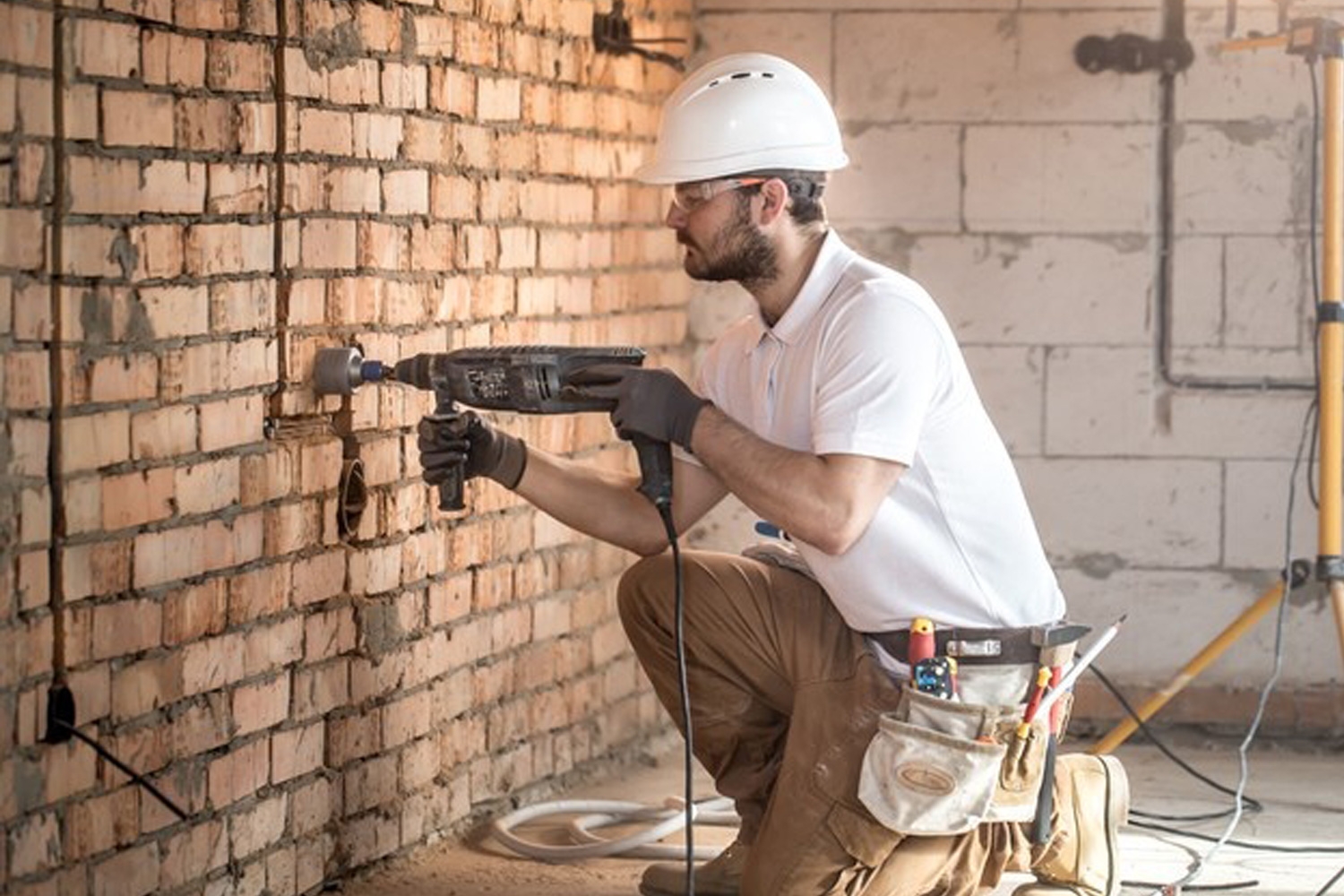
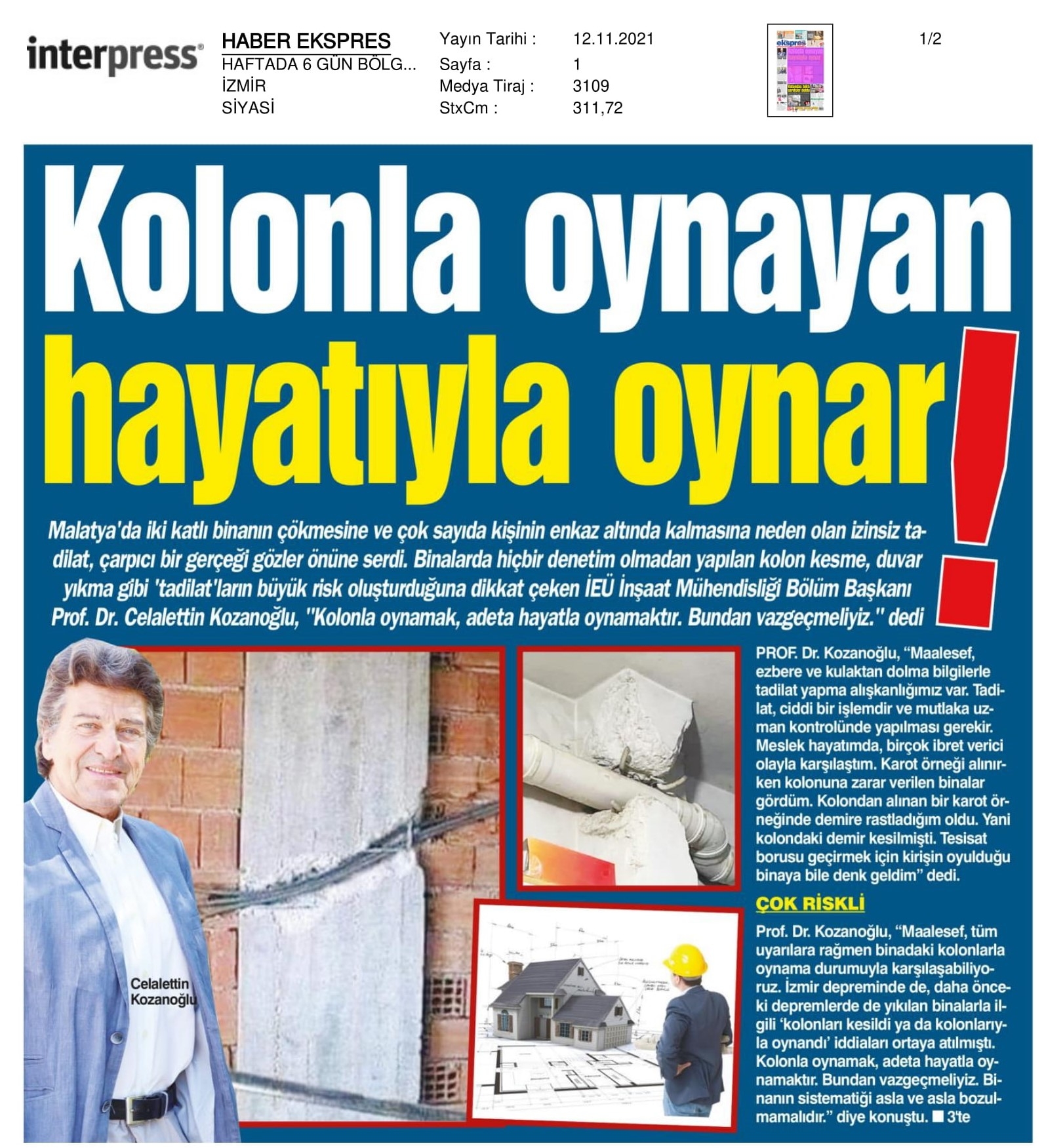
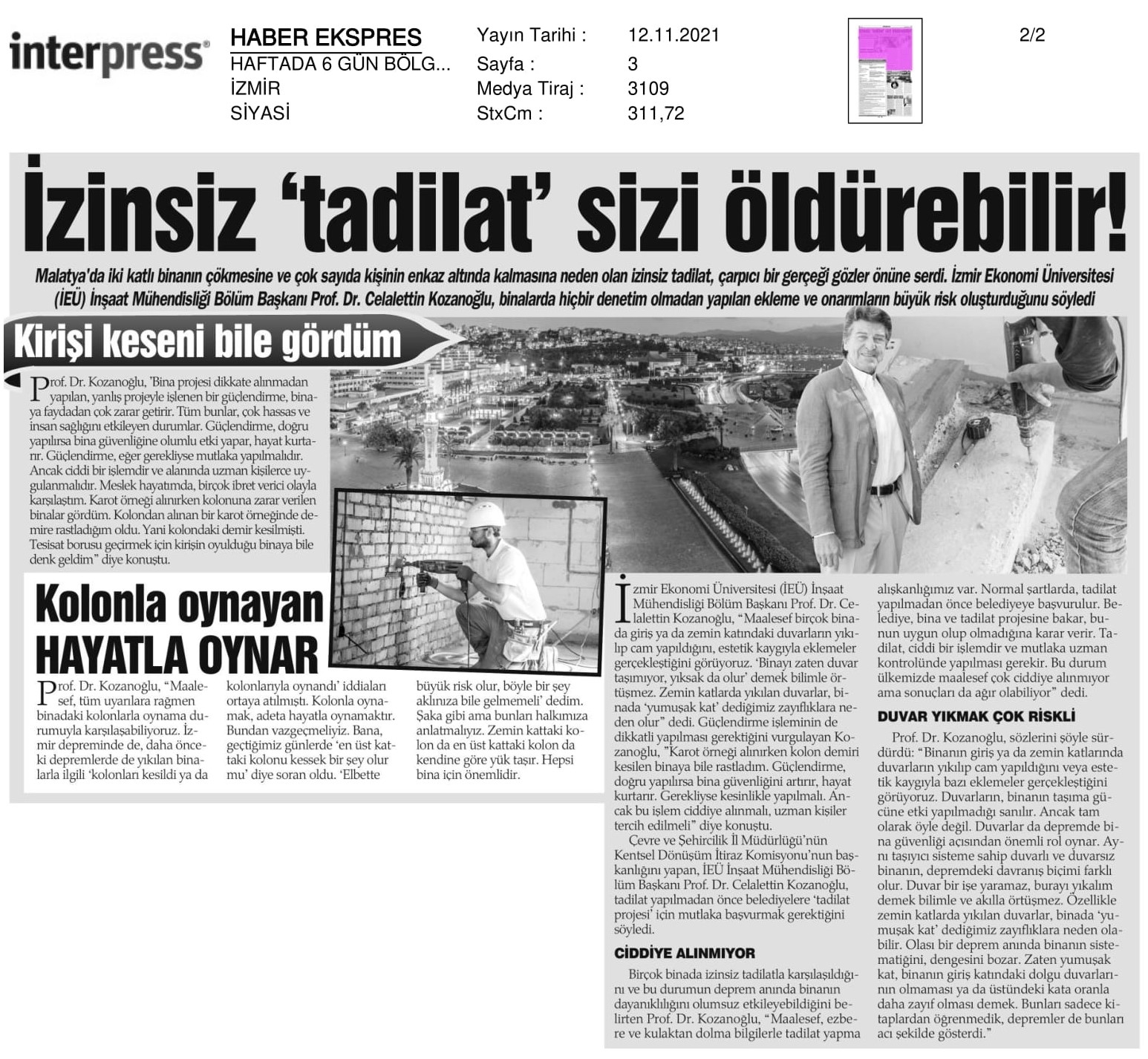
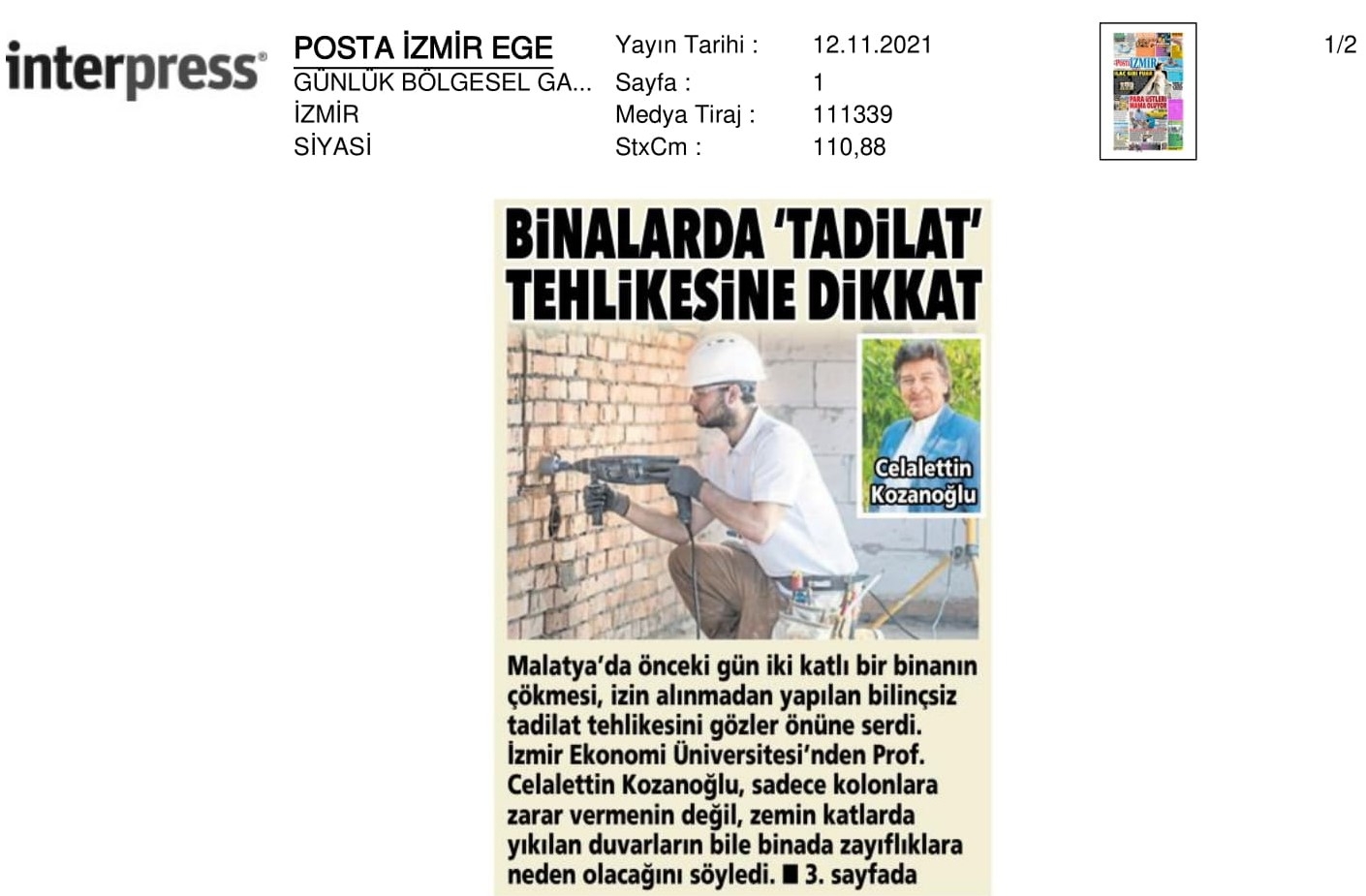
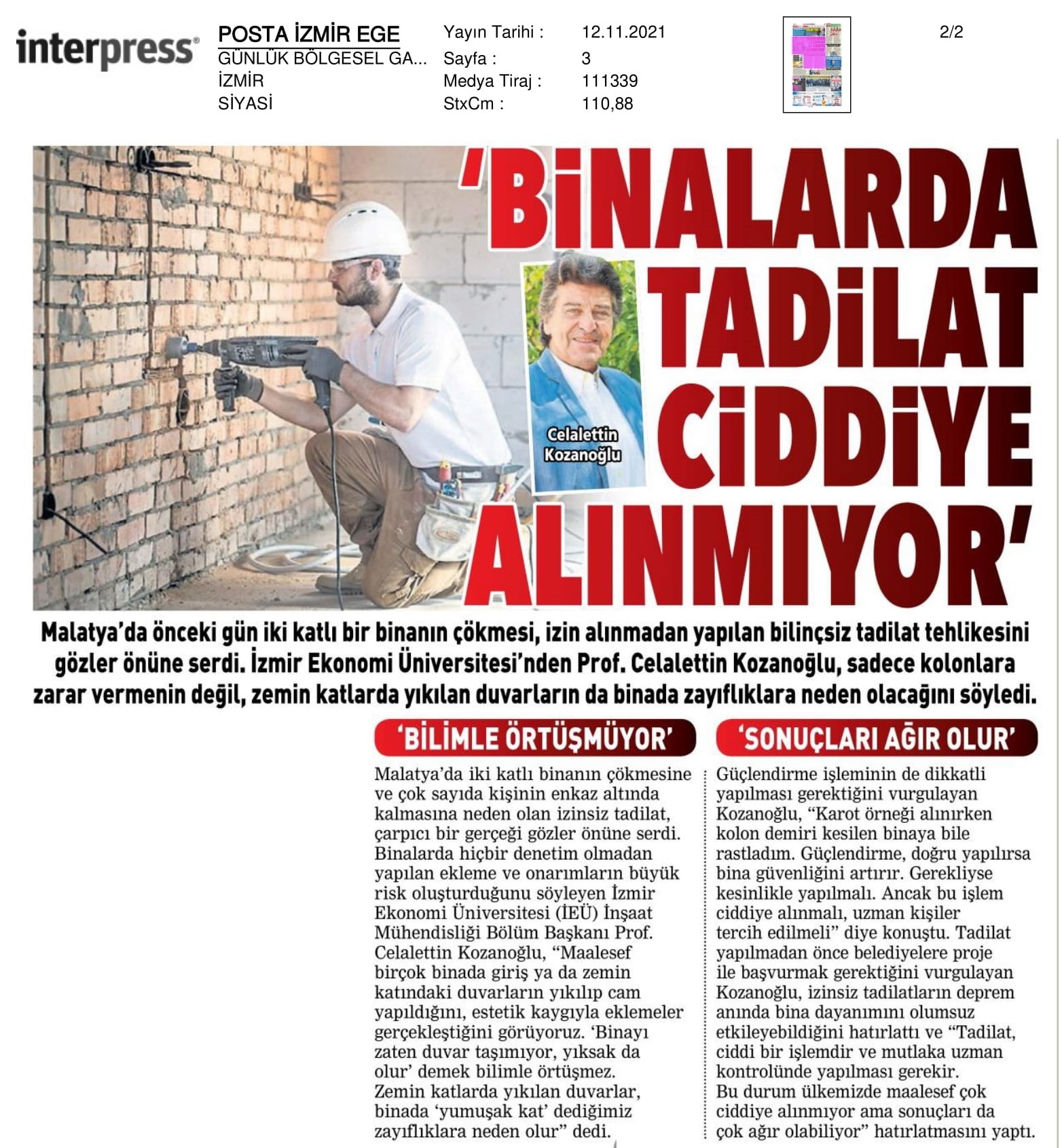
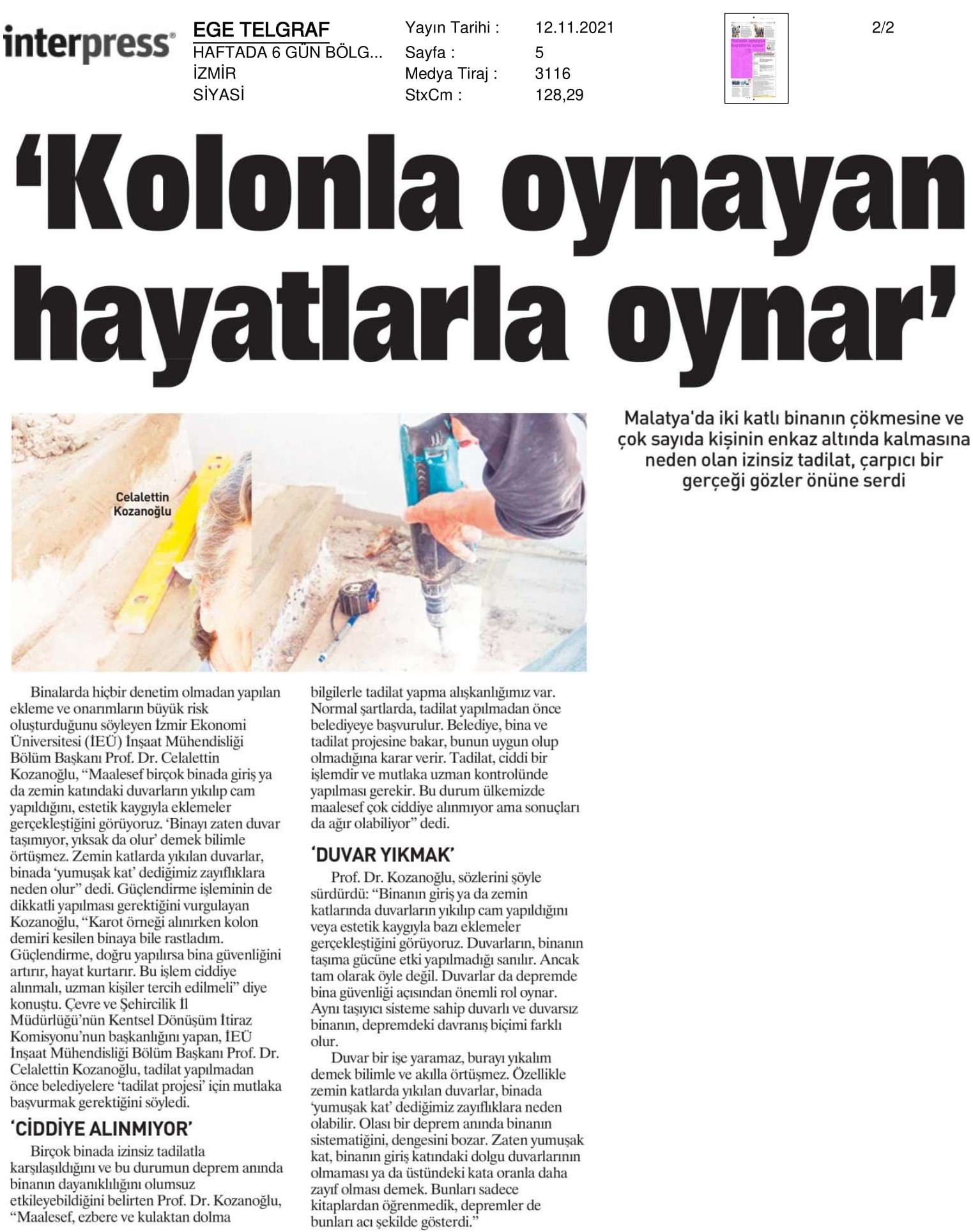
The unauthorized renovation, which caused the collapse of a two-story building in Malatya and leaving many people under the rubble, revealed a striking fact. Stating that additions and repairs made without any supervision in buildings pose a great risk, Prof. Dr. Celalettin Kozanoğlu, Head of Department of Civil Engineering, Izmir University of Economics (IUE) said, “Unfortunately, we see that the entrance or ground floor walls in many buildings are demolished and turned into glass, and additions are made for aesthetic concerns. Saying, ‘The wall does not carry the building anyway, it will not hurt even if we demolish it" does not agree with science. The collapsed walls on the ground floors result in weaknesses we call the 'soft story' in the building.” Emphasizing that the strengthening process should also be done carefully, Kozanoğlu said, “I even came across a building where steel bars in the columns have been cut while the core sample was being taken. Retrofitting, if done right, increases building safety and saves lives. If necessary, it should definitely be done. However, this process should be taken seriously, and done by experts.”
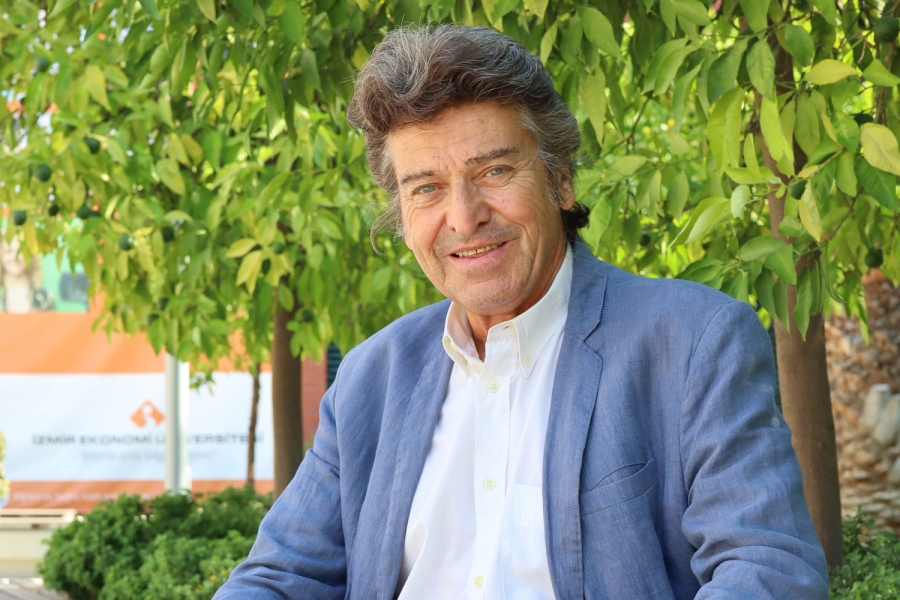
Chairing also the Urban Transformation Appeals Commission of Provincial Directorate of Environment and Urbanization, Prof. Dr. Celalettin Kozanoğlu, Head of IUE Department of Civil Engineering, stated that before the renovation is done, it is absolutely necessary to apply to the municipalities for a 'renovation project'.
NOT BEING TAKEN SERIOUSLY
Stating that many buildings have undergone unauthorized renovations and that this situation may adversely affect the durability of the building in the event of an earthquake, Prof. Dr. Kozanoğlu said, “Unfortunately, we are in the habit of renovating by rote and hearsay. Under normal circumstances, the municipality is consulted before the renovation is done. The municipality examines the building and renovation project and decides whether it is appropriate. Renovation is a serious process and must be done under expert control. Unfortunately, this is not taken very seriously in our country, but the consequences can be severe.”
BREAKING THE WALLS IS TOO RISKY
Prof. Dr. Kozanoğlu stated the following: “We see that the walls are demolished and turned into glass on the entrance or ground floors of the building or some additions are made for aesthetic concerns. It is assumed that the walls do not affect the bearing capacity of the building. However, it is not exactly like that. Walls also play an important role in building safety in earthquakes. The behavior of a building with walls and without walls with the same load-bearing system in an earthquake will be different. Saying that the wall is useless, let's tear down this place does not agree with science and reason. The collapsed walls on the ground floors in particular can cause weaknesses in the building, which is called 'soft story'. It disrupts the systematic and balance of the building in the event of a possible earthquake. A soft story means that there are no infill walls on the ground floor of the building or that it is weaker than the floor above it. We didn't just learn these from books, earthquakes also showed them painfully.”
I SAW PEOPLE WHO CUT THE BEAM TO MAKE PLUMBING PIPE GO THROUGH
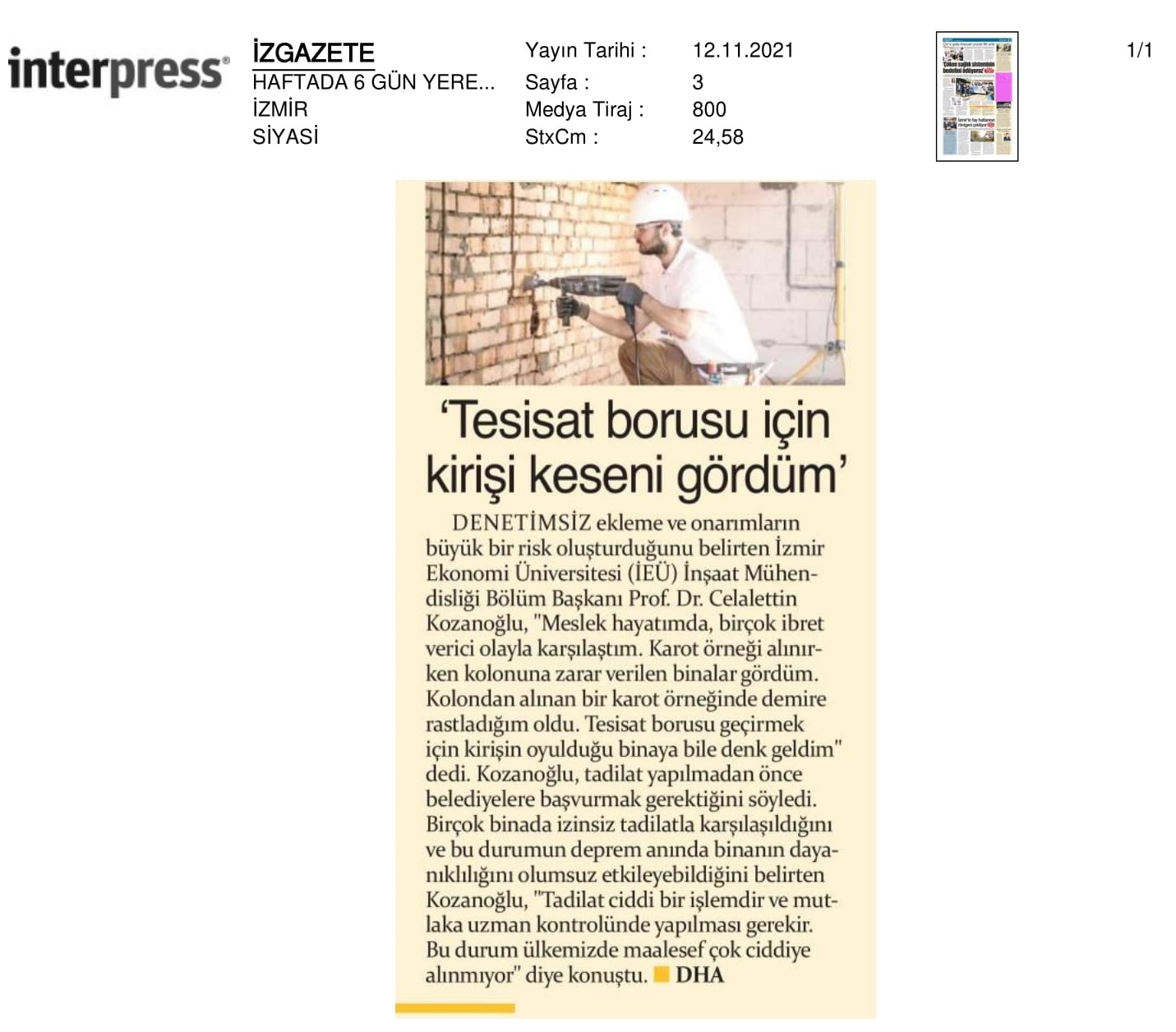
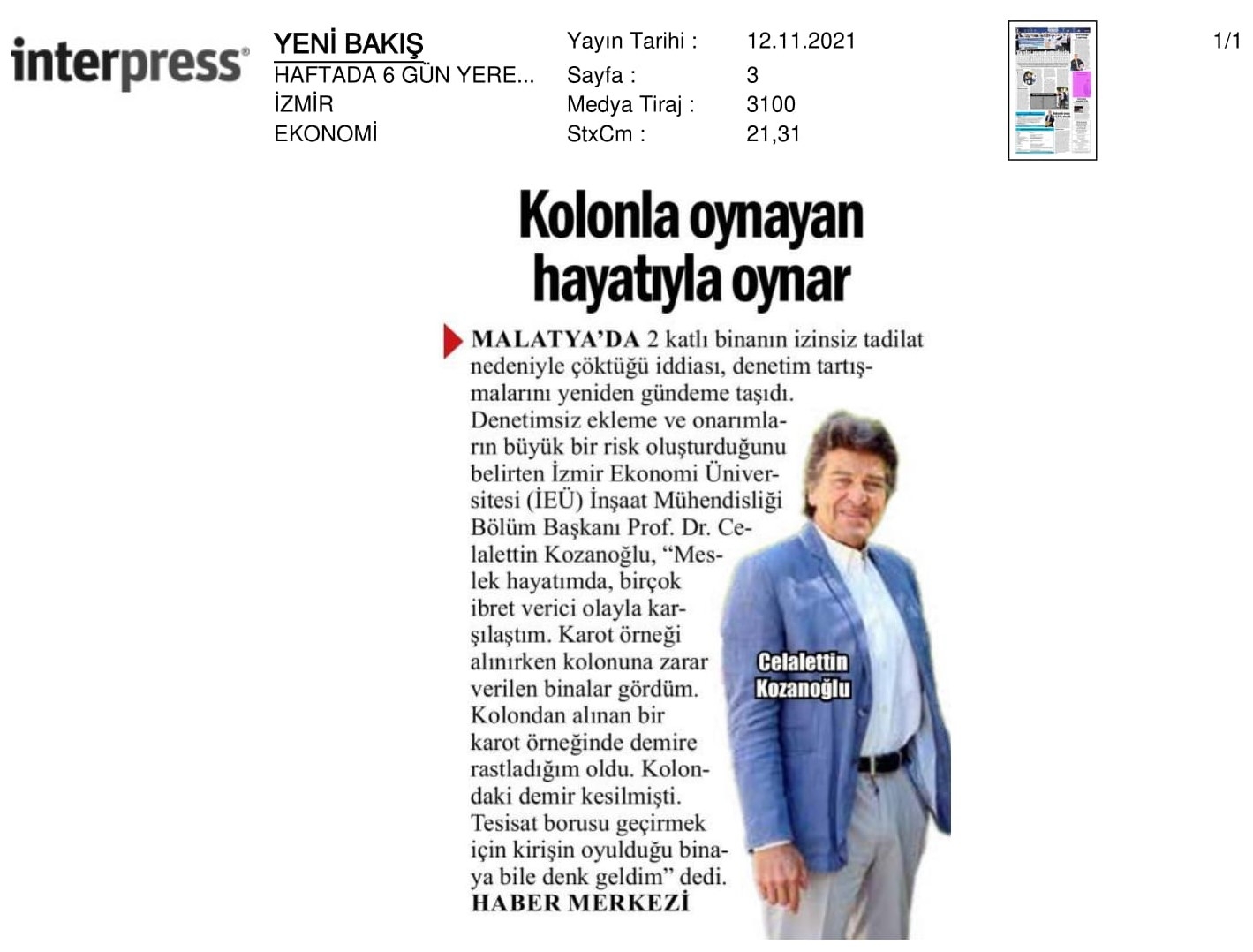
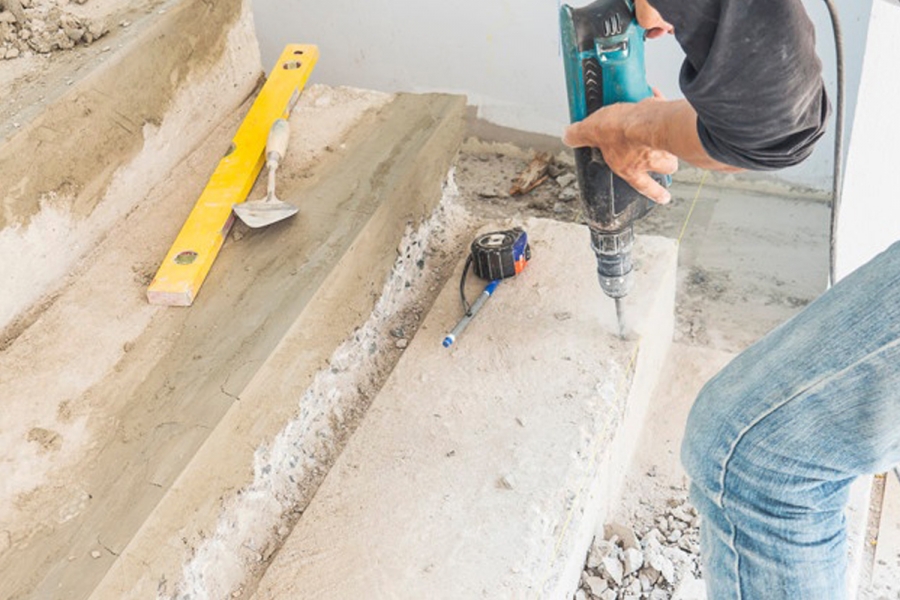
Stating that the strengthening works for the building is also be considered as renovations, Prof. Dr. Kozanoğlu also gave remarkable advice in this regard. Kozanoğlu said, “Strengthening the building is a renovation. Structural reinforcement for each building is different. Static calculations should be made according to the weak point of the building, and ten reinforcement should be made. The application should be consistent with the project. A retrofit made without considering the building project and processed with the wrong project will do more harm than good to the building. All these are very sensitive situations that affect human health. Reinforcement, if done correctly, has a positive effect on building safety and saves lives. Reinforcement should be done if necessary. However, it is a serious process and should be done by experts. I have encountered many exemplary incidents in my professional life. I have seen buildings with damaged columns while taking core samples. I have encountered steel in a core sample taken from the column. Meaning that the steel in the column was cut. I even stumbled upon a building where the beam was hollowed out to run the plumbing pipe through.”
THOSE WHO MESS WITH COLUMNS, RISKS LIVES OF OTHERS
Prof. Dr. Kozanoğlu continued as follows: “Unfortunately, despite all the warnings, we encounter situations of messing with the columns in the building. Claims were made about the buildings that were destroyed in the Izmir earthquake and in previous earthquakes about their columns being cut or their manipulated. Messing with the columns is like putting lives at risk. We must stop this. Some people asked me recently, ‘Is it okay if we cut the column on the top floor?’ I said, 'Of course not, it would be a big risk, you shouldn't even think of such a thing'. This is like a joke, but we should tell this to people. The column on the ground floor and the column on the top floor both carry load. All of them are important for the building. For example, according to the regulation, even the snow carrying capacity is calculated when the building is constructed. The systematics of the building should never be changed.”
Press Clippings