

They examined building, showcased their models
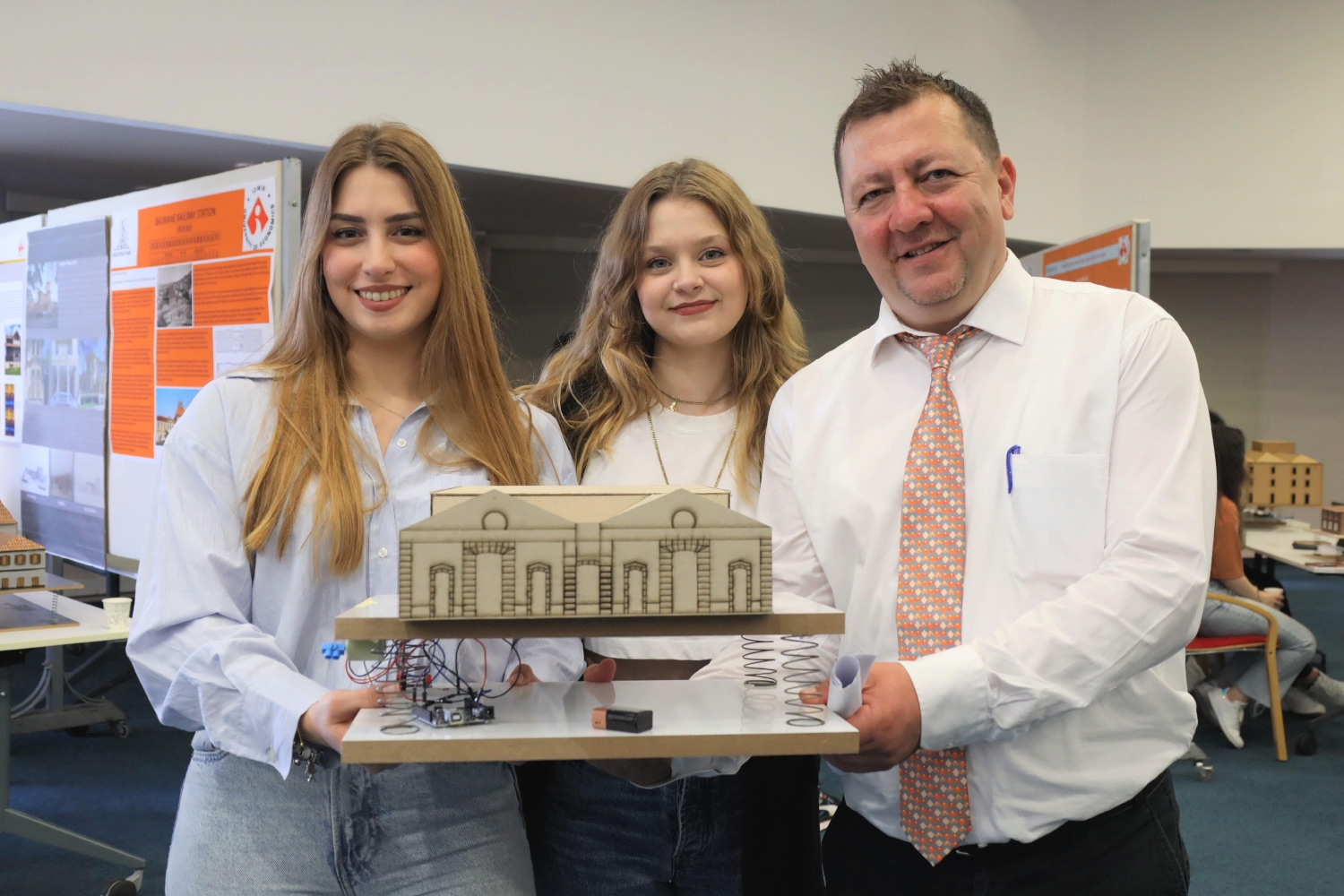
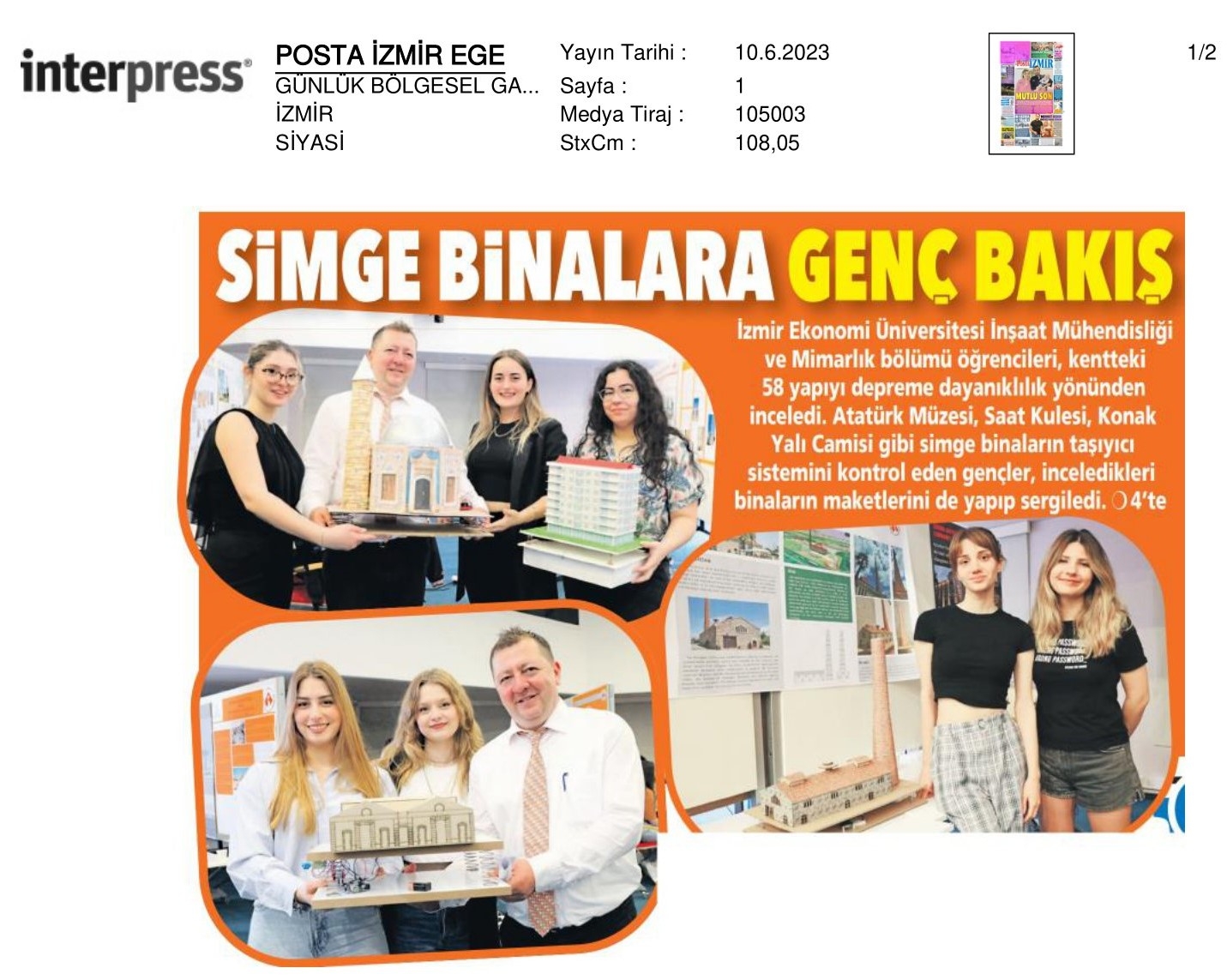
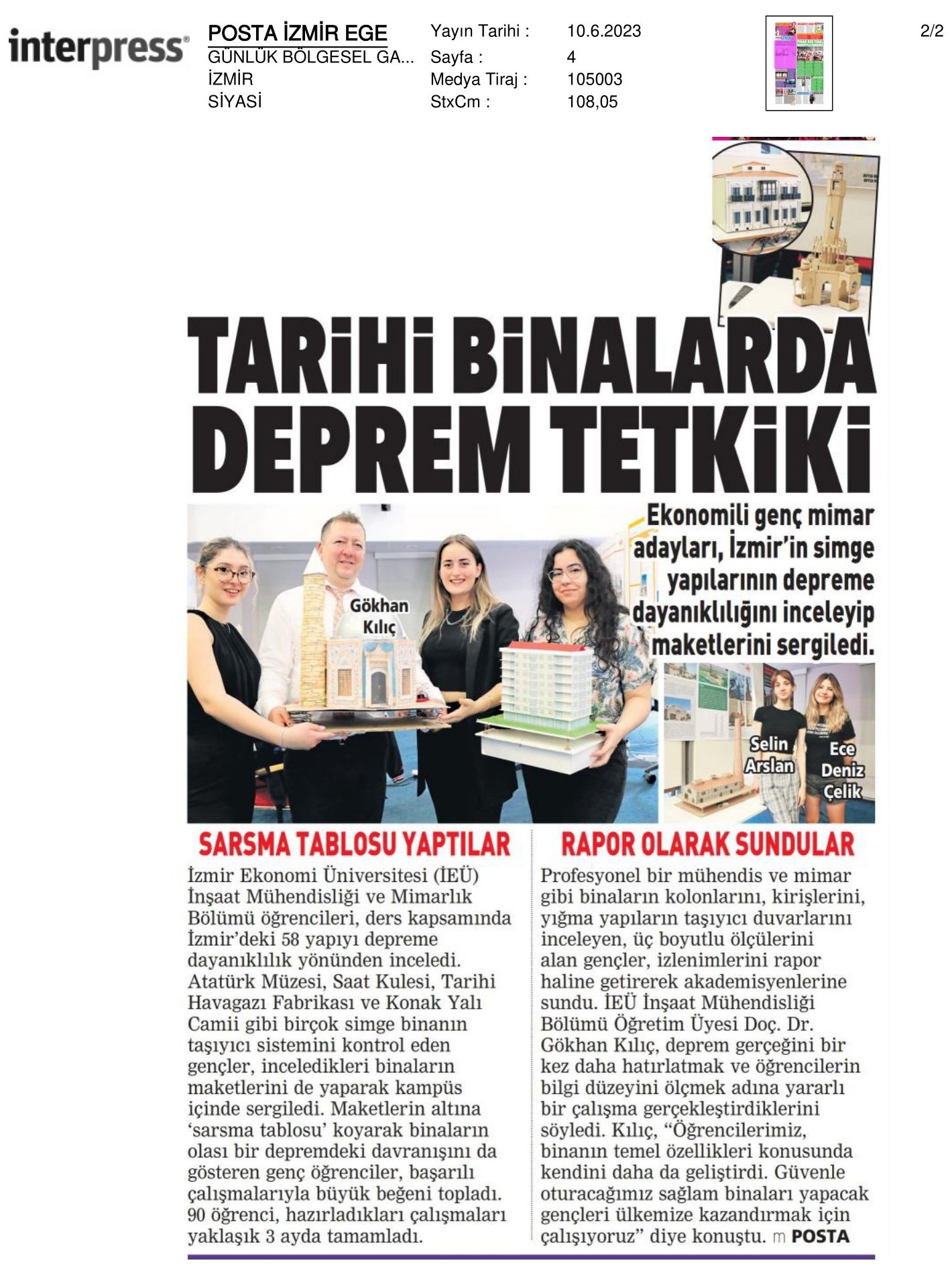
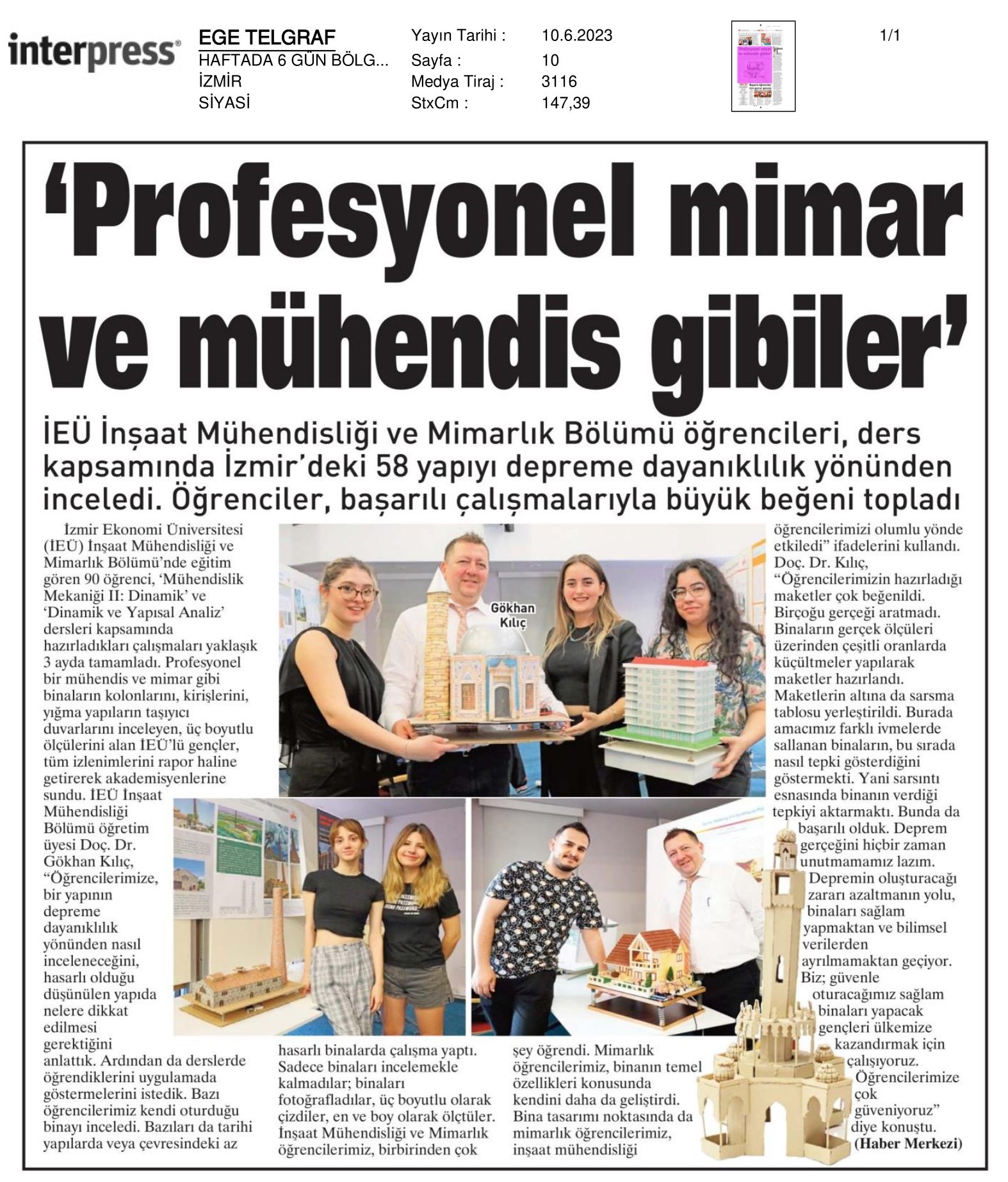
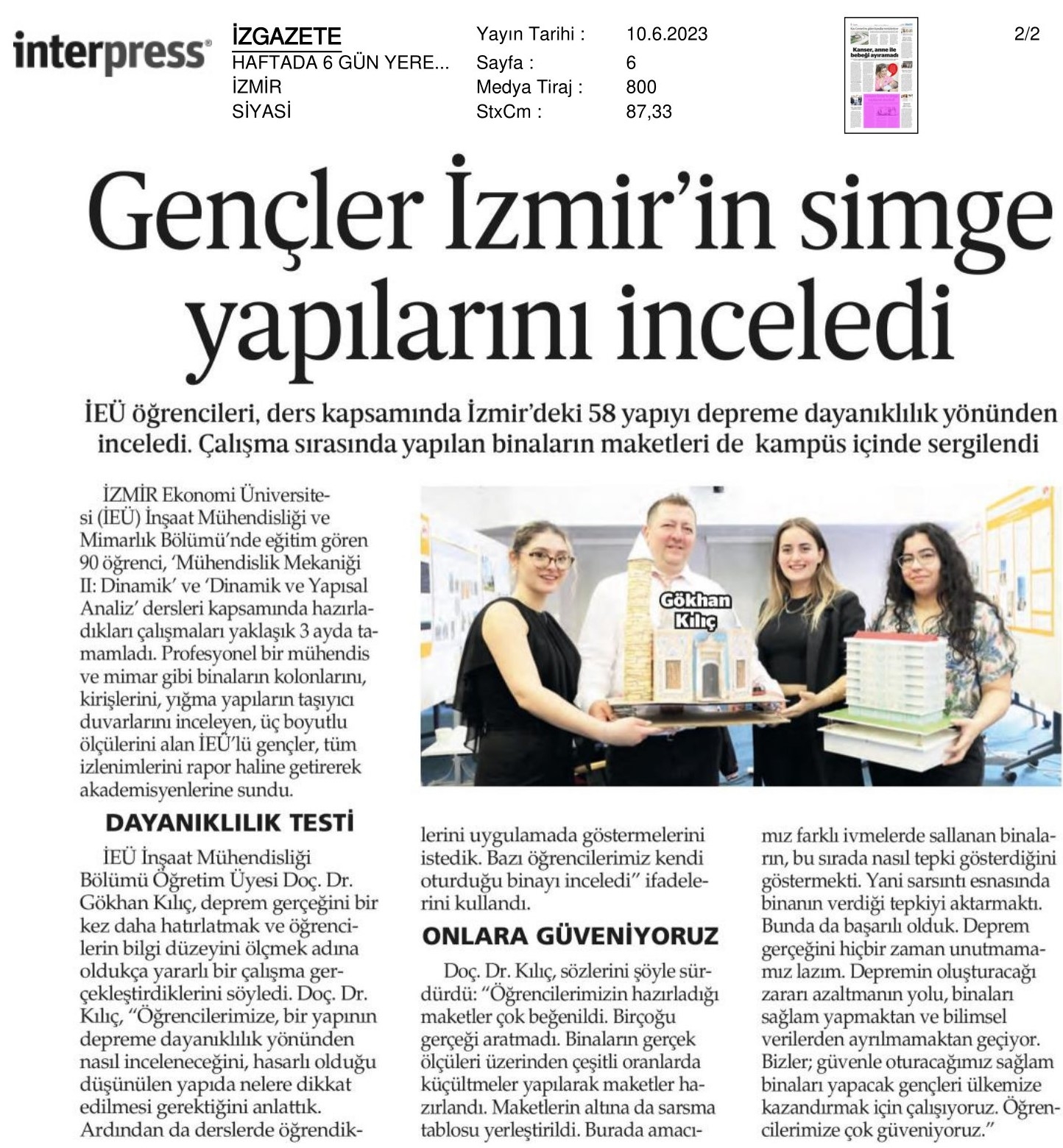
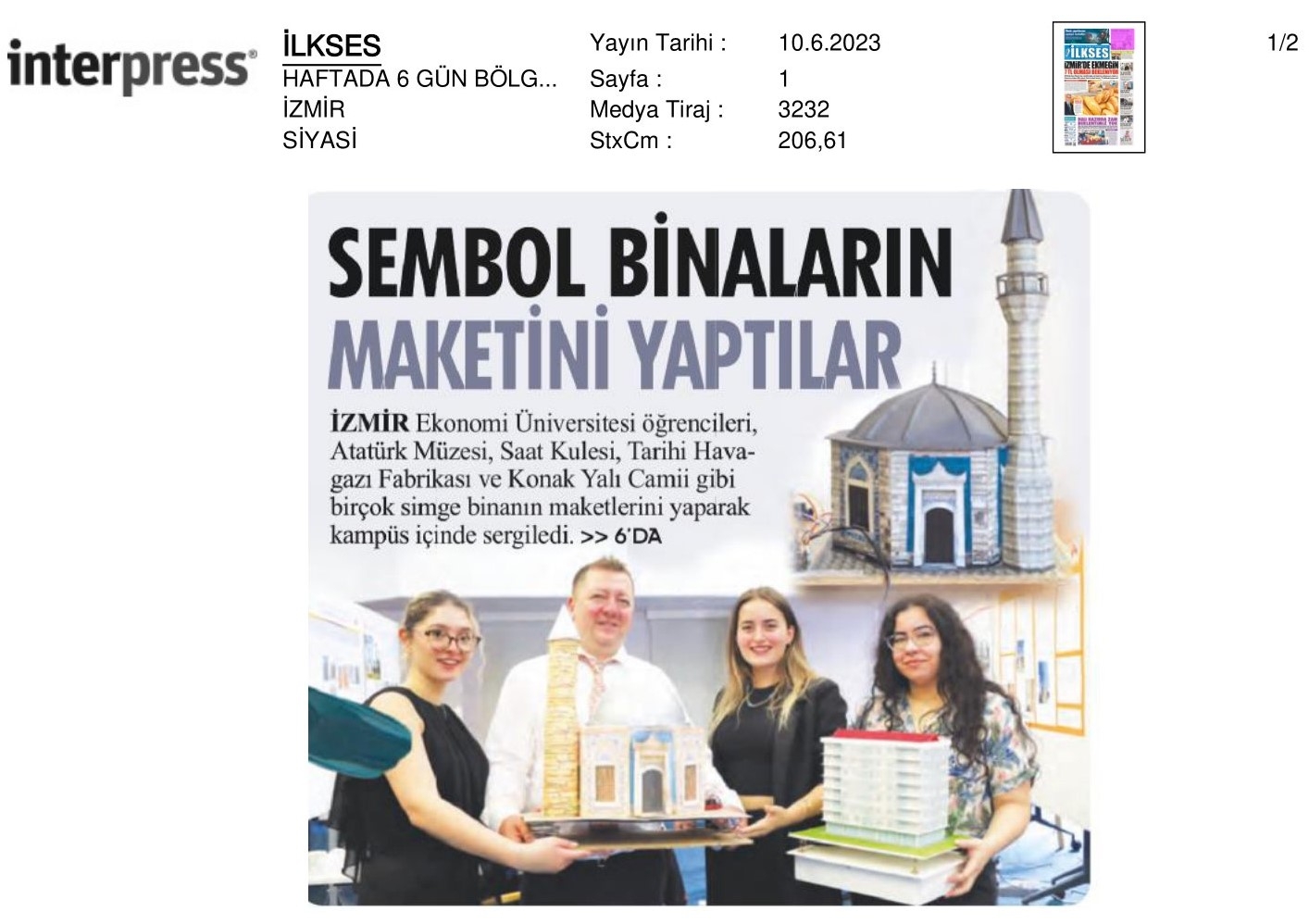
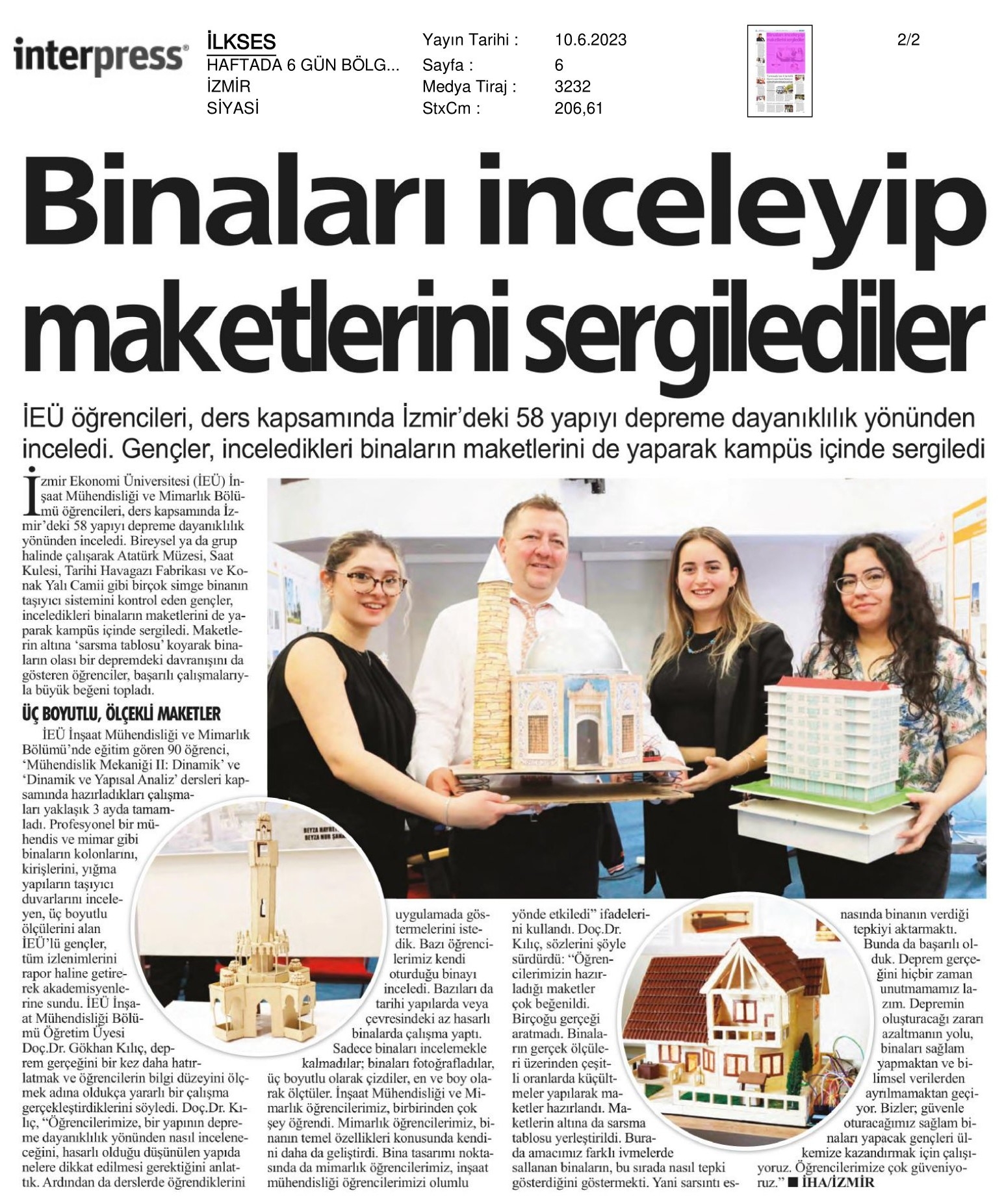
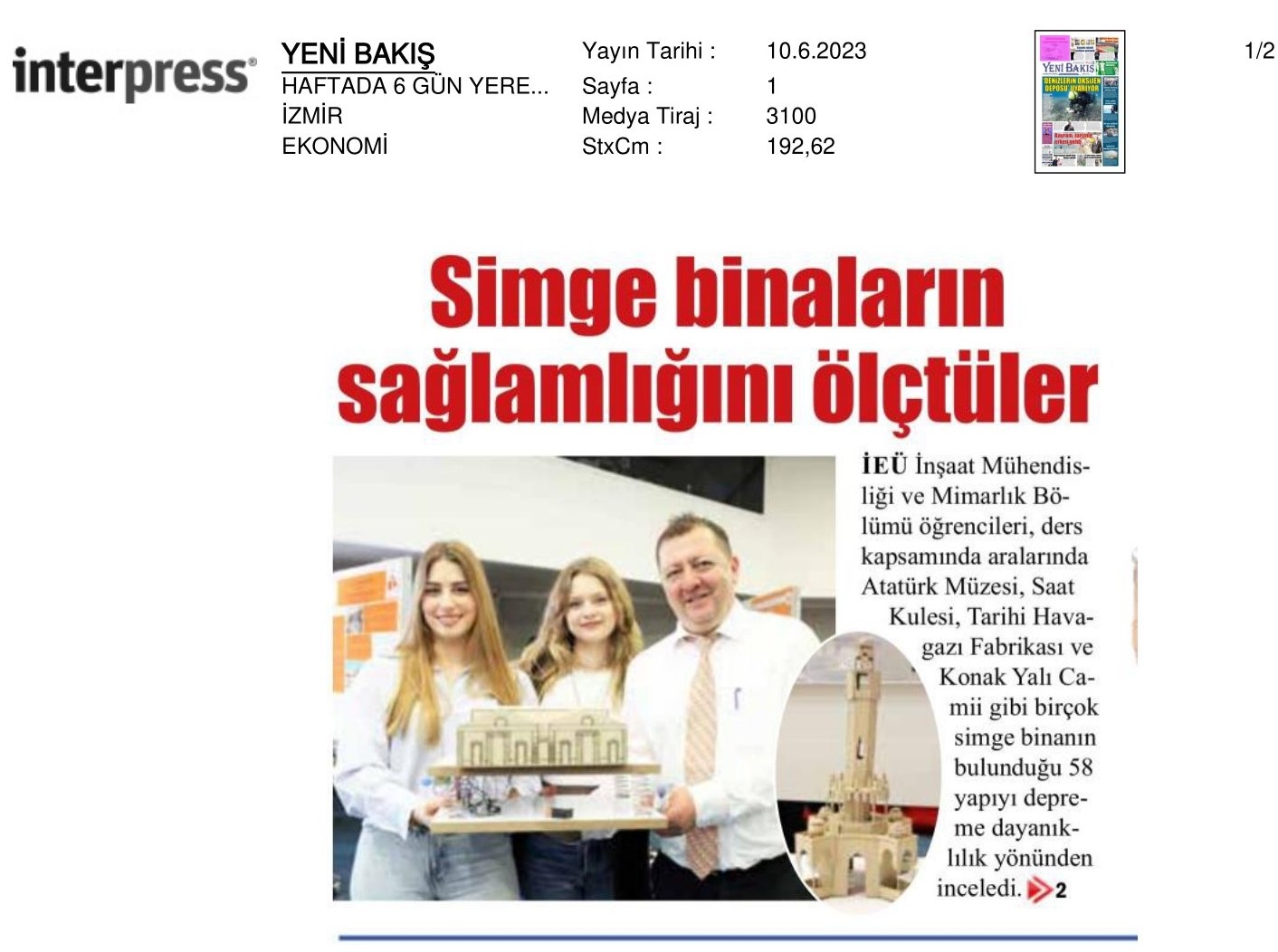
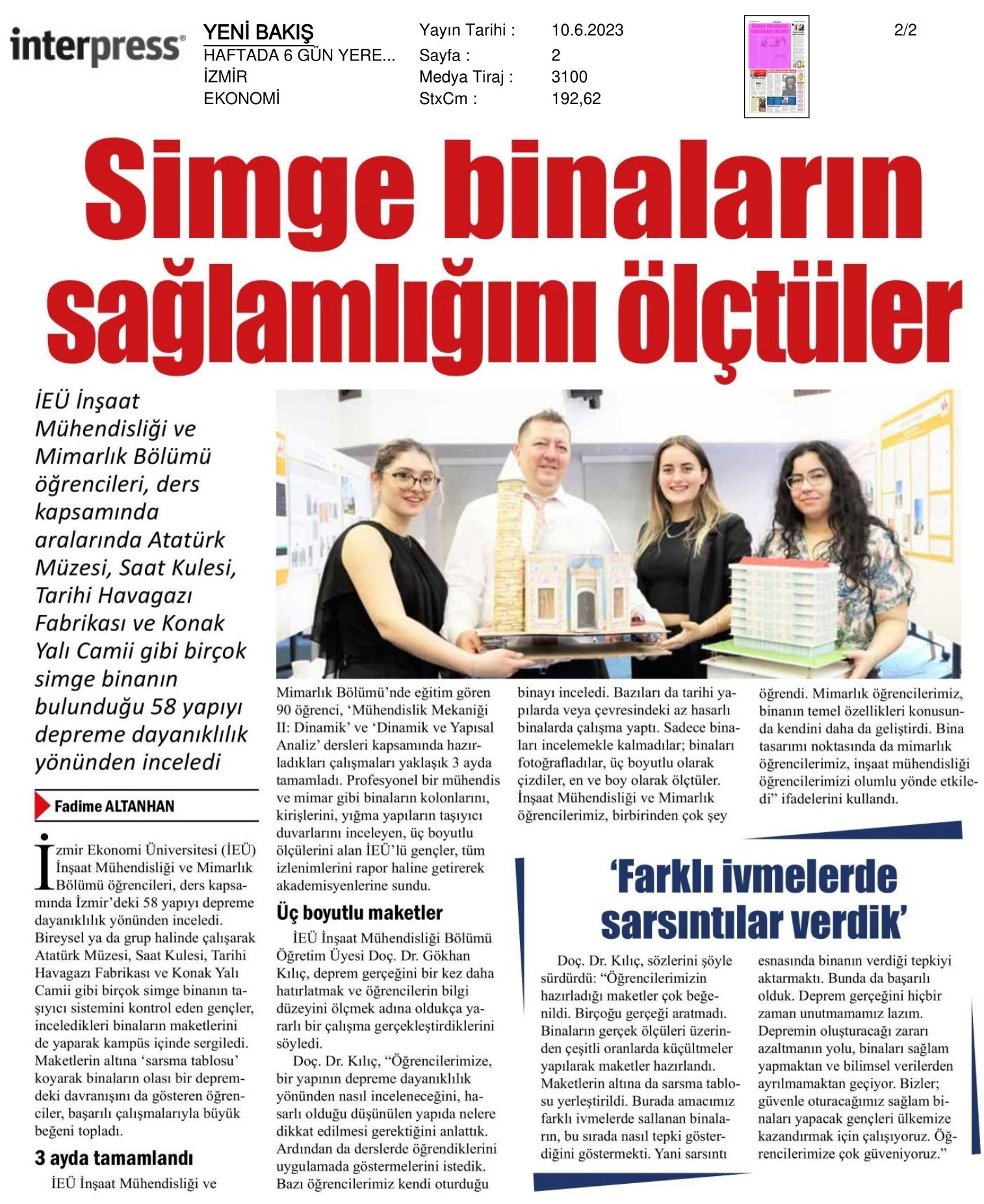
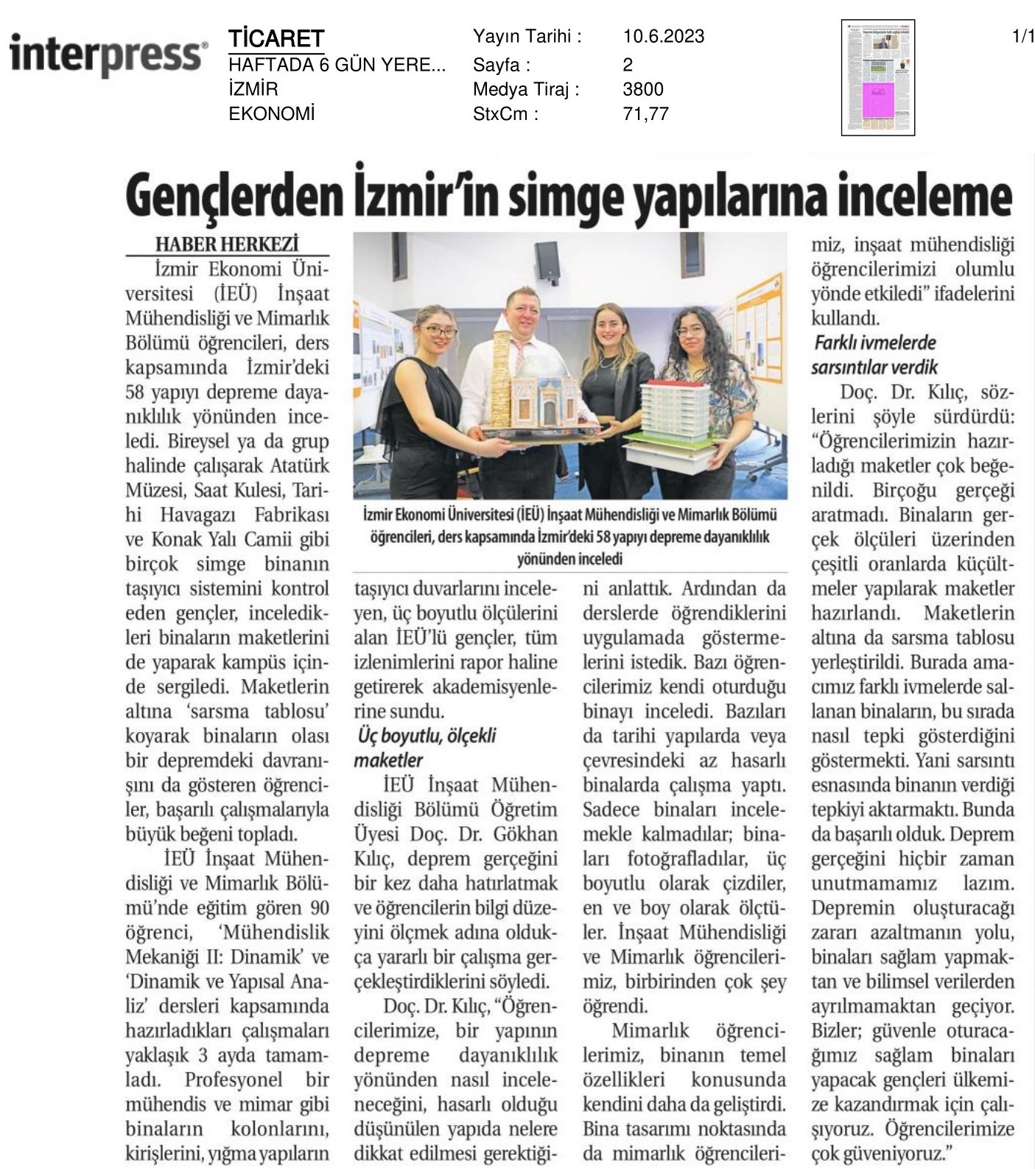
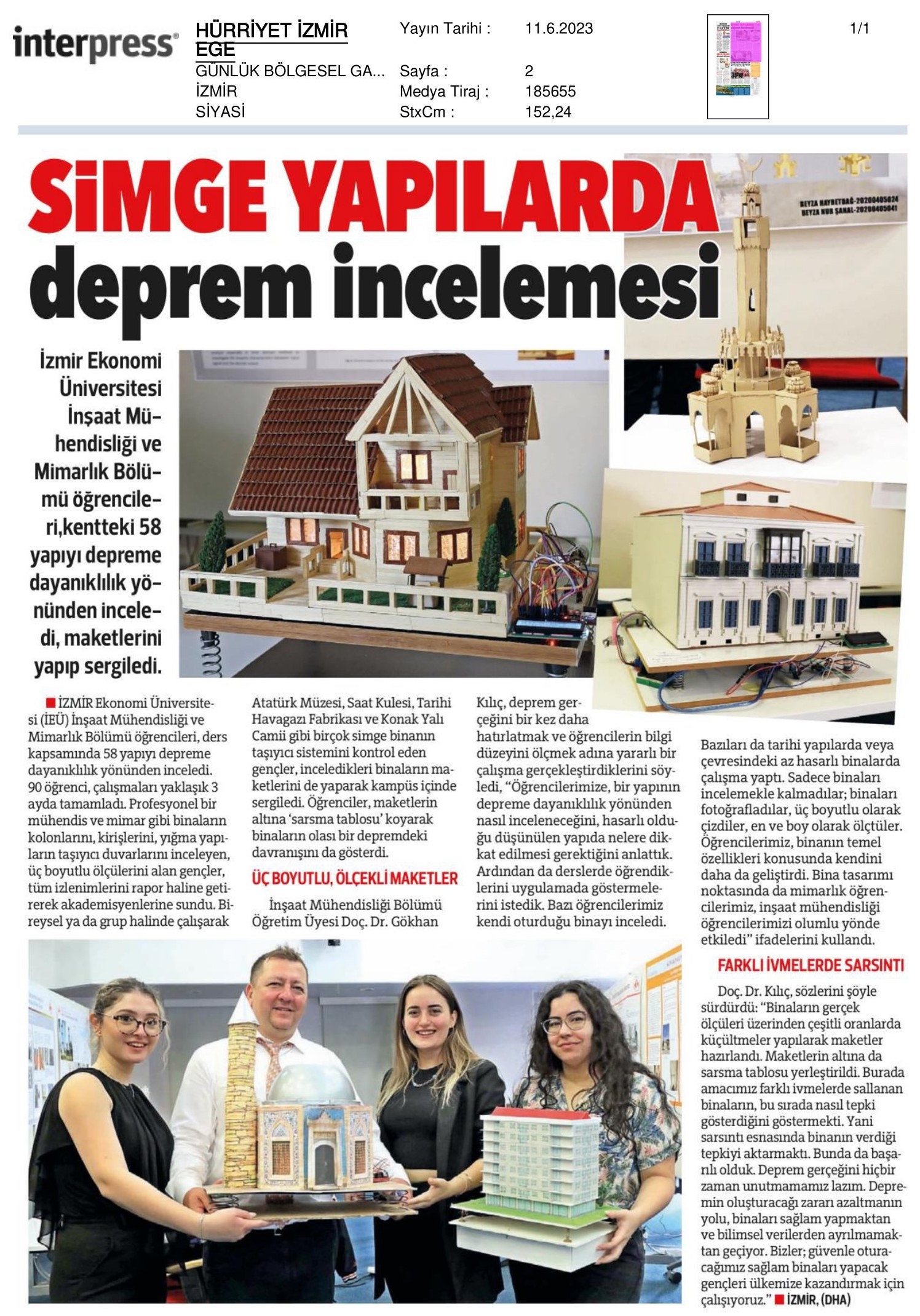
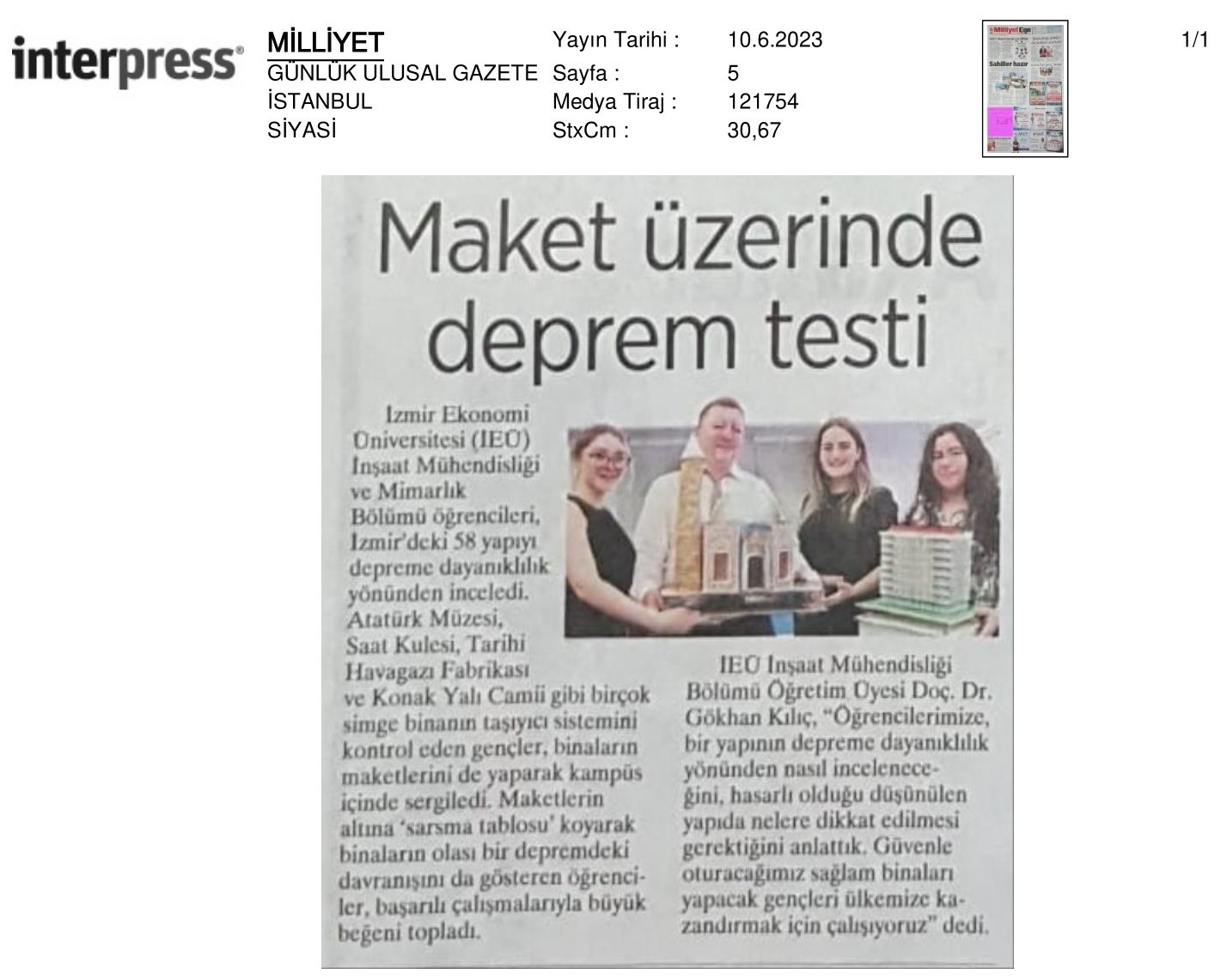
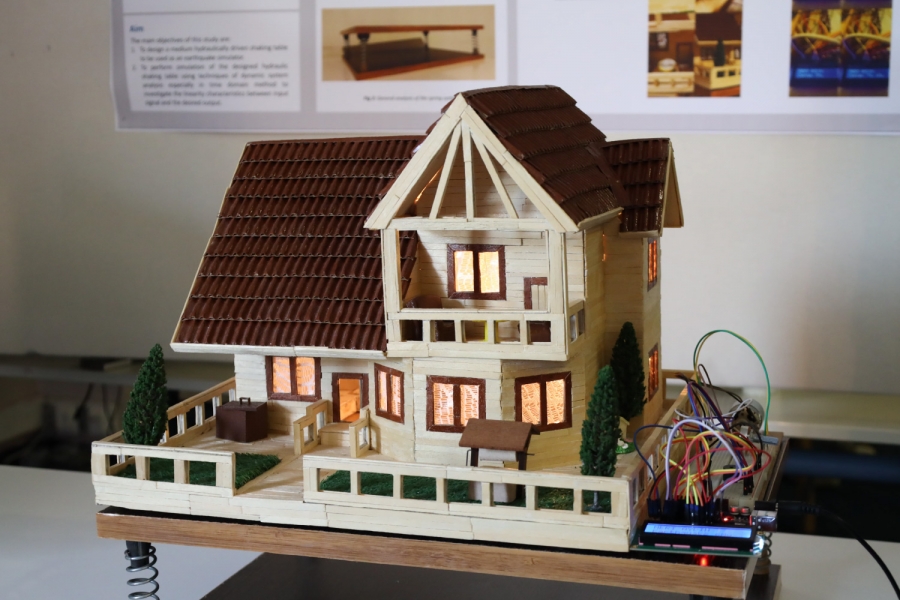
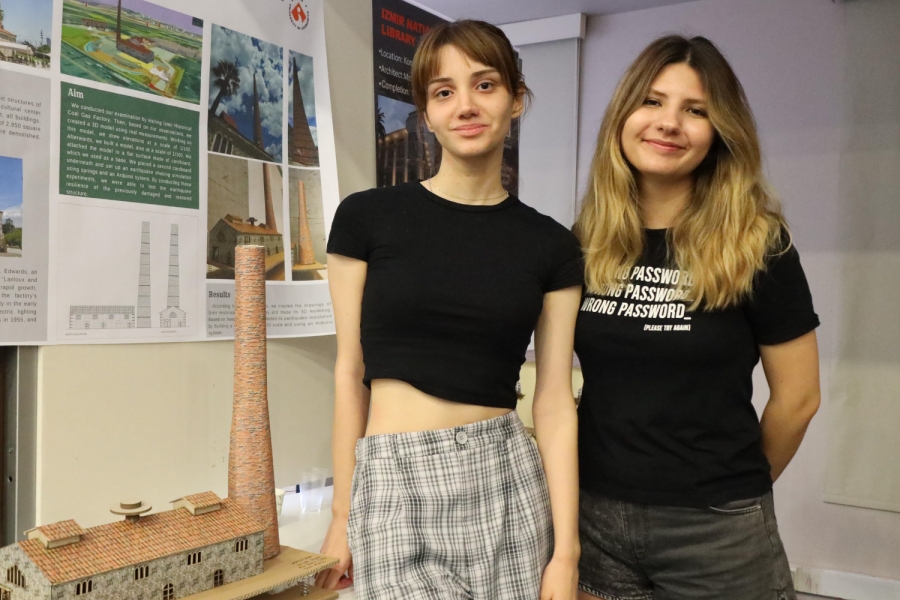
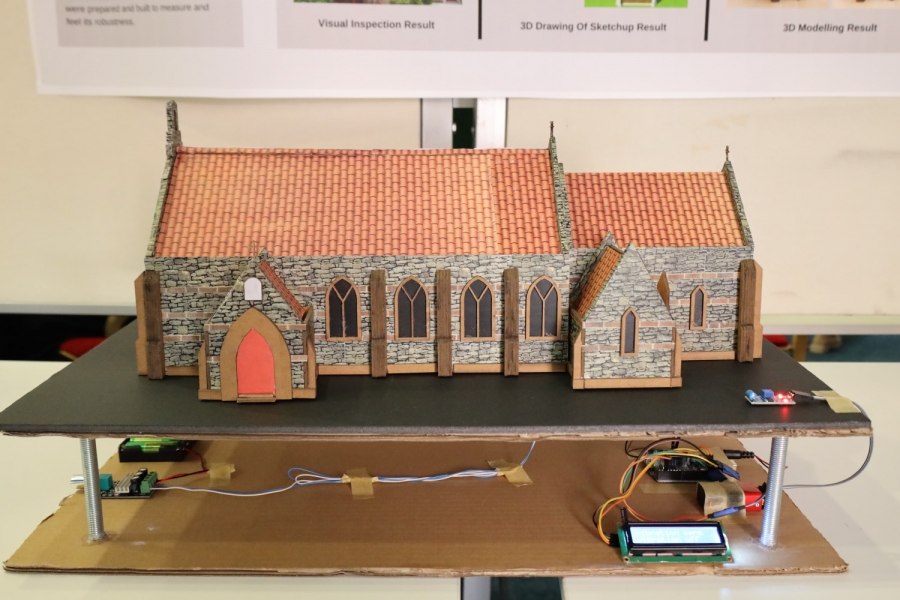
Izmir University of Economics (IUE) Department of Civil Engineering and Architecture students examined 58 buildings in Izmir in terms of earthquake resistance within the scope of the course. Working individually or in groups, the young people, who controlled the carrier system of many iconic buildings such as the Atatürk Museum, Clock Tower, Historical Gas Factory and Konak Yalı Mosque, also made models of the buildings they examined and exhibited them on campus. The students, who showed the behavior of the buildings in a possible earthquake by putting a 'shaking table' under the models, were greatly appreciated with their successful work.
90 students studying at IUE Department of CivilEngineering and Department of Architecture completed the projects they prepared within the scope of ‘Engineering Mechanics II: Dynamics’ and ‘Dynamics and Structural Analysis’ courses in about 3 months. Examining the columns, beams, and load-bearing walls of masonry buildings and taking their three-dimensional measurements like professional engineers and architects, young people from IUE presented all their evaluations to their academics in a report.
THREE-DIMENSIONAL, SCALED MODELS
Assoc. Prof. Dr. Gökhan Kılıç from IUE Department of Civil Engineering said that they carried out a very useful study in order to remind everyone of the fact of the earthquake once again and to measure the knowledge level of the students. Assoc. Prof. Dr. Kılıç said, “We told our students how to examine a building in terms of earthquake resistance and what should be considered in a building that is believed to be damaged. Then we asked them to demonstrate what they learned in the lessons in practice. Some of the students examined their own building. Others have also examined historic buildings or the lightly damaged buildings around them. Not only they examined buildings; they also photographed the buildings, drew them in three dimensions, and measured them in width and height. Civil Engineering and Architecture students learned a lot from each other. Architecture program students improved on the basic features of the building. Students of architecture had a positive impact on students of civil engineering in terms of building design.”
SHAKES AT DIFFERENT ACCELERATIONS
Assoc. Prof. Dr. Kılıç continued as follows: “The models prepared by students were highly appreciated. Many of them were too realistic. Models were prepared by making reductions in various proportions on the actual dimensions of the buildings. A shaking table was placed under the models. The purpose here was to show how buildings that shake at different accelerations react during this time. In other words, it was to convey the reaction of the building during the shaking. And, we succeeded. We must never forget the reality of earthquakes. The way to reduce the damage caused by an earthquake is to make the buildings strong and stick by the scientific data. We are working to bring young people to our country who will build solid buildings in which we can live in safely. We trust our students very much.”
Press Clippings