

‘Izmir’s’ distinction in global competition
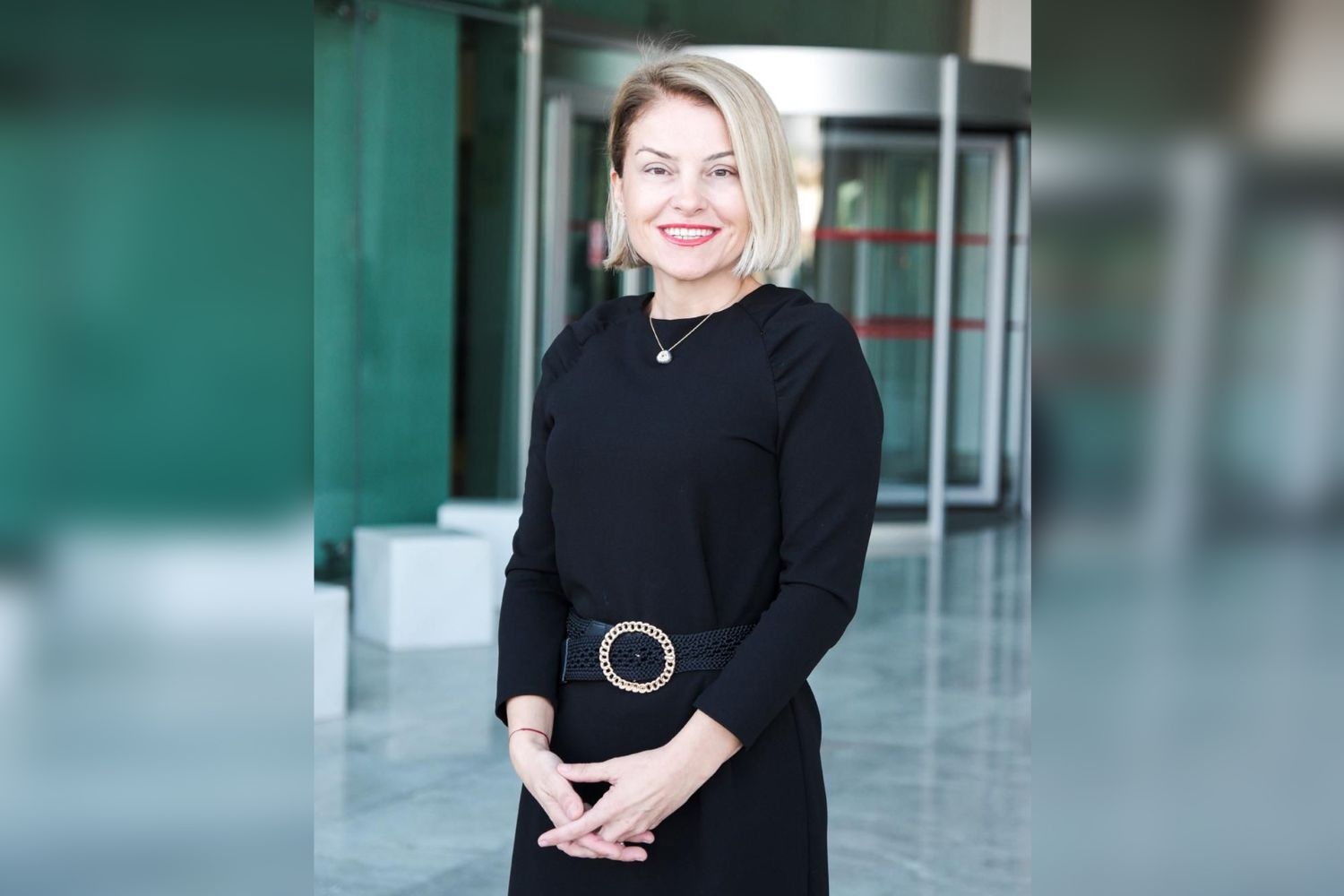
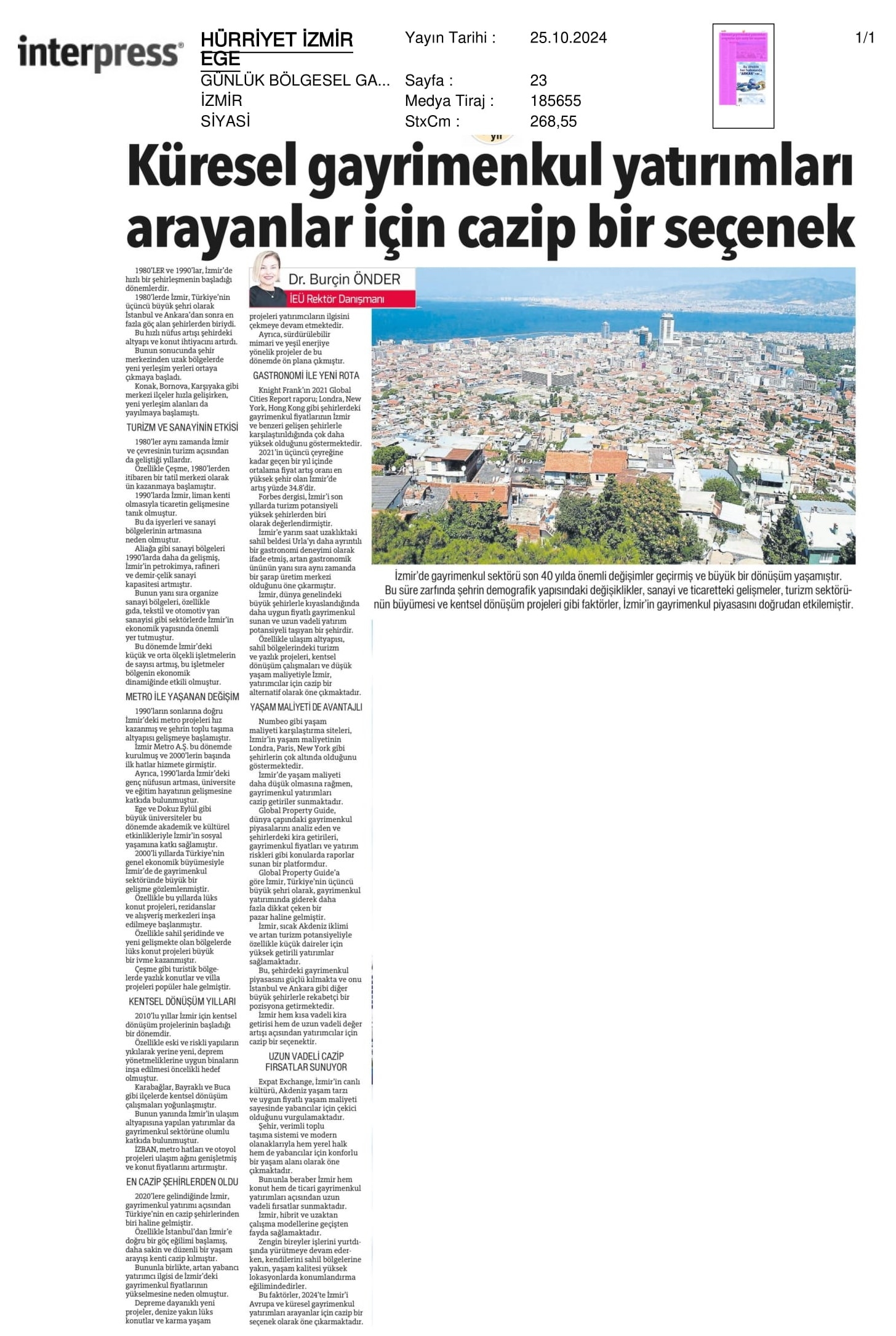
Asst. Prof. Dr. Burçin Önder, Faculty Member and Advisor to the Rector at Izmir University of Economics (IUE), stated that Izmir offers long-term opportunities in both residential and commercial real estate investments. In a special article written for Hürriyet newspaper, Asst. Prof. Dr. Önder shared important data revealing the development of Izmir’s housing market.
Asst. Prof. Dr. Önder expressed the following in her article: “The real estate sector in Izmir has undergone significant changes and experienced a major transformation over the past 40 years. During this time, changes in the city’s demographics, developments in industry and commerce, growth in tourism, and urban transformation projects have directly influenced Izmir’s real estate market.
The 1980s and 1990s marked the beginning of rapid urbanization in Izmir. In the 1980s, Izmir, as Turkey’s third-largest city, was among the top cities receiving migration after Istanbul and Ankara. This rapid increase in population increased the demand for infrastructure and housing. As a result, new residential areas started to emerge in regions far from the city center. Central districts such as Konak, Bornova, and Karşıyaka rapidly developed, while new settlement areas began to expand. The 1980s also marked the beginning of Izmir’s development as a tourist destination. Especially from the 1980s onward, Çeşme started gaining fame as a vacation resort.
CONTRIBUTION TO SOCIAL DEVELOPMENT
In the 1990s, Izmir witnessed the growth of commerce due to its status as a port city, leading to an increase in workplaces and industrial zones. Areas like Aliağa saw significant development in this decade, and Izmir’s petrochemical, refinery, and iron-steel industry capacities increased. Additionally, organized industrial zones, particularly in sectors such as food, textiles, and automotive supply, became vital to Izmir’s economic structure. The number of small and medium-sized enterprises also rose, playing a key role in the region’s economic dynamics. Toward the end of the 1990s, metro projects gained momentum in Izmir, and the city's public transportation infrastructure began to develop. Izmir Metro Inc. was established during this period, with the first lines opening in the early 2000s. Furthermore, the growing young population in Izmir during the 1990s contributed to the advancement of education and university life. Major universities like Ege University and Dokuz Eylül University played an active role in the city’s academic and cultural life.
INVESTMENTS’ POSITIVE IMPACT
In the 2000s, alongside Turkey’s general economic growth, Izmir’s real estate sector also experienced major development. Luxury housing projects, residences, and shopping malls began to be constructed during these years. High-end residential developments gained significant momentum, especially along the coastline and in newly developing areas. Vacation homes and villa projects became popular in tourist regions like Çeşme. The 2010s marked the beginning of urban transformation projects in Izmir. The primary focus was the demolition of old, risky buildings and replacing them with earthquake-resistant new constructions. Urban transformation efforts intensified in districts like Karabağlar, Bayraklı, and Buca. Additionally, investments in Izmir’s transportation infrastructure also contributed positively to the real estate sector. Projects like IZBAN (suburban rail), metro lines, and highways expanded the transportation network and increased property prices.
BECAME ATTRACTIVE
By the 2020s, Izmir had become one of Turkey’s most attractive cities for real estate investment. A migration trend from Istanbul to Izmir began, driven by the desire for a quieter and more organized lifestyle. This, along with growing foreign investor interest, led to a rise in real estate prices in Izmir. New, earthquake-resistant projects, luxury properties near the sea, and mixed-use developments continue to attract investors. Additionally, sustainable architecture and green energy projects have come to the forefront during this period.
The 2021 Global Cities Report by Knight Frank showed that property prices in cities like London, New York, and Hong Kong were significantly higher compared to developing cities like Izmir. Izmir recorded the highest annual average price increase among global cities by the third quarter of 2021, with a rise of 34.8%.
GAINED GLOBAL ATTENTION
Forbes magazine recently named Izmir as one of the cities with high tourism potential. It highlighted the seaside town of Urla, only 30 minutes from Izmir, as a destination offering a more refined gastronomic experience. Urla's growing fame for food and its identity as a wine-producing center were also emphasized.
When compared to major cities around the world, Izmir offers more affordable real estate and long-term investment potential. Thanks to its transportation infrastructure, coastal tourism and summer housing projects, urban regeneration efforts, and low cost of living, Izmir stands out as an appealing alternative for investors. Cost of living comparison sites like Numbeo indicate that Izmir’s cost of living is far below that of cities like London, Paris, and New York. Despite lower living costs, real estate investments in Izmir continue to yield attractive returns.
INCREASED COMPETITIVENESS
Global Property Guide is a platform that analyzes real estate markets worldwide, reports on rental yields, property prices, and investment risks in cities across the globe. According to Global Property Guide, Izmir, as Turkey’s third-largest city, has become an increasingly noteworthy market for real estate investment. With its warm Mediterranean climate and rising tourism potential, Izmir offers high-yield investment opportunities, especially for small apartments. This strengthens the real estate market and positions the city competitively alongside other major cities like Istanbul and Ankara. Izmir is a compelling option for investors in terms of both short-term rental returns and long-term value appreciation.
Expat Exchange emphasizes that Izmir is appealing to foreigners due to its vibrant culture, Mediterranean lifestyle, and affordable cost of living. The city stands out as a comfortable living environment for both locals and expatriates, thanks to its efficient public transport system and modern amenities. Moreover, Izmir offers long-term opportunities in both residential and commercial real estate. The city is benefiting from the global shift to hybrid and remote work models. Wealthy individuals who continue to manage their businesses abroad are increasingly choosing to live in high-quality coastal locations. These factors are positioning Izmir as an attractive option for European and global real estate investors in 2024.”
Press Clippings