

A New Model in Education
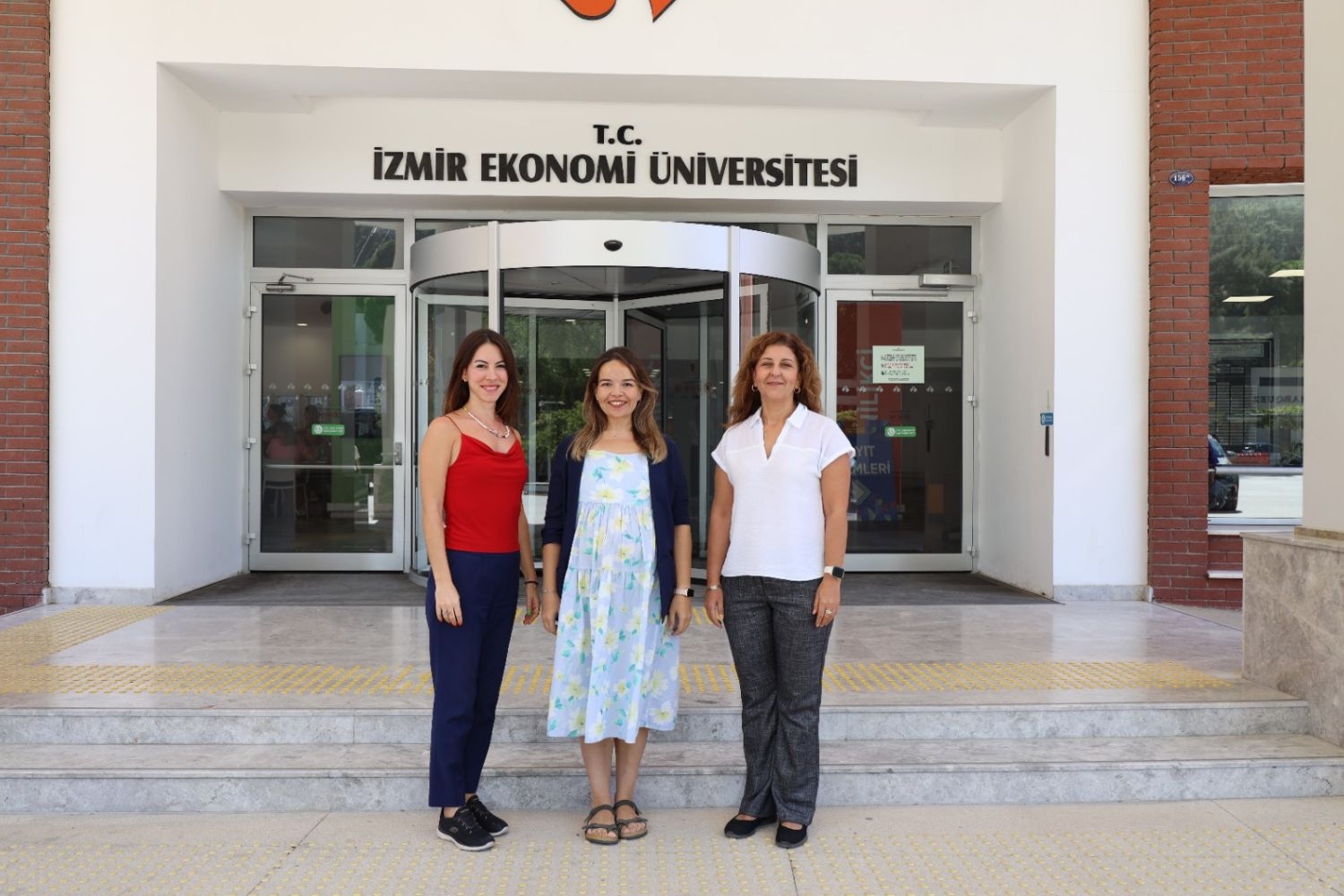
Izmir University of Economics (IUE), which has taken exemplary steps in digital education for Turkey by strengthening its technological infrastructure, has conducted its first course trial based on a student-centered asynchronous learning model in the field of translation and interpreting. The course ‘Lexicology’, taken by 70 students in the Department of English Translation and Interpreting, was digitalized following a systematic and structured process in instructional design.
The course was designed in collaboration with subject matter experts Assoc. Prof. Dr. Ilgın Aktener and Asst. Prof. Dr. Gülden Taner Yavuz, along with instructional designer Asst. Prof. Dr. Esin Çağlayan, Director of IUE’s Teaching and Learning Center (TLC). It featured learning-focused, interactive, and audiovisual instructional materials to enrich the experience. This course, which went through a scientific instructional design process and enabled the individual tracking of each student's progress through analytical reports and formative assessments, received positive feedback from students. Assoc. Prof. Dr. Ilgın Aktener, Vice Dean of the Faculty of Arts and Sciences, stated that they received a lot of positive feedback from students and added, “We were very successful in our first trial. We are considering using this method in other courses as well.”
EVERY DETAIL WAS CONSIDERED
Stating that the course, previously conducted face-to-face, is now delivered in a digital format, Assoc. Prof. Dr. Aktener said, “We have digitalized all processes of the course, except for midterm and final exams. We prepared five modules and considered every detail, including video materials, reading resources, written content, and tests. We followed a student-focused approach constantly and met with r students individually when needed.”
A MODEL THAT WILL SET AN EXAMPLE
Emphasizing the importance of digitalization in education, Assoc. Prof. Dr. Aktener said, “Our goal was to enhance students' learning autonomy and use time more efficiently. We plan to adapt this method to other courses as well.”
Asst. Prof. Dr. Esin Çağlayan, Director of TLC, highlighted the instructional design approaches and the professionally created content used in planning the course. Asst. Prof. Dr. Çağlayan said, “Courses like this will serve as examples for our University's digitalization goals. We are taking strong, pioneering steps in the field of digital education. We are integrating technological innovations into courses to help students learn faster and more effectively. The strength of our University in this area, combined with its accumulated knowledge, experience, and technical infrastructure, makes a difference.”