

Universities' 'Vision' Meeting
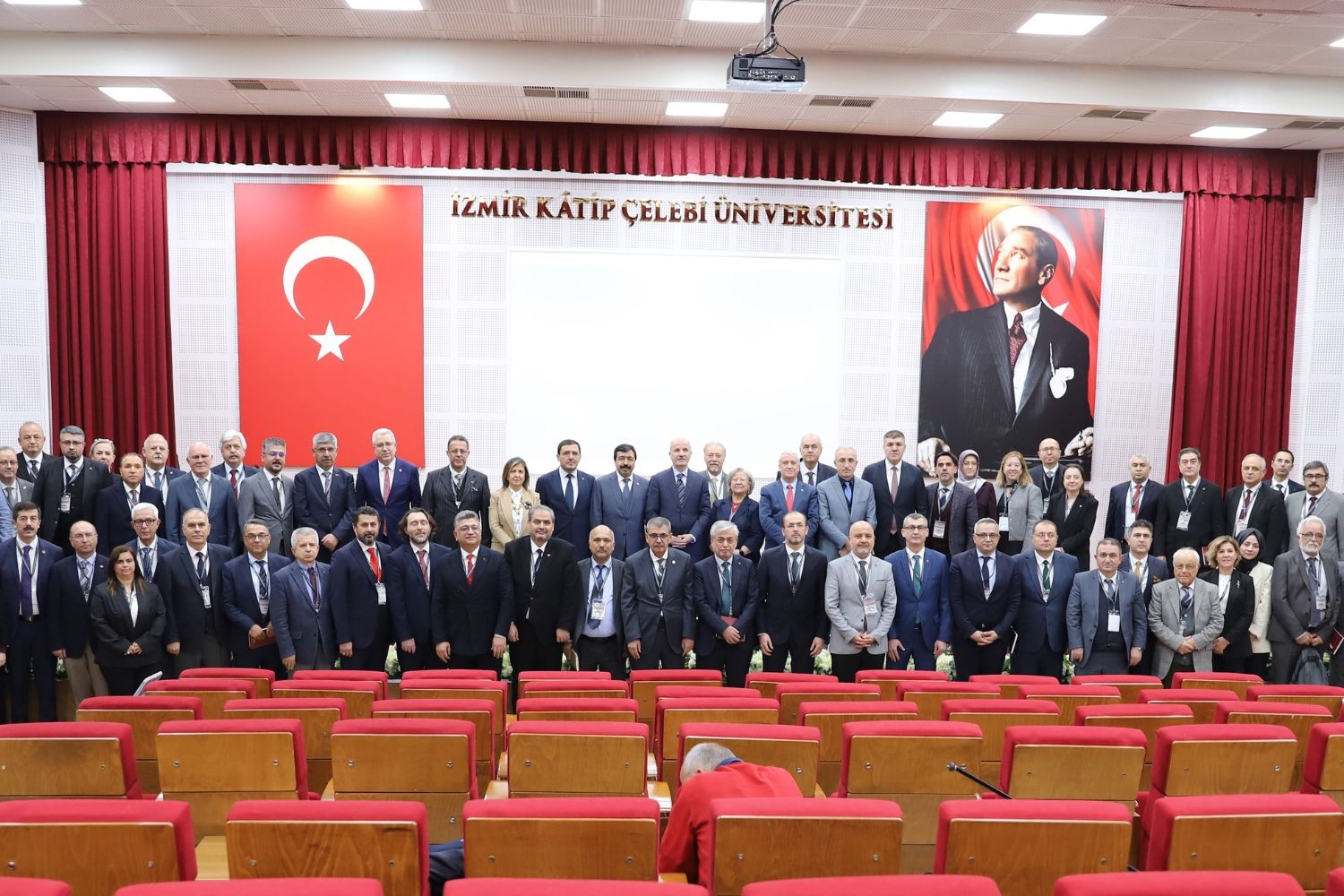
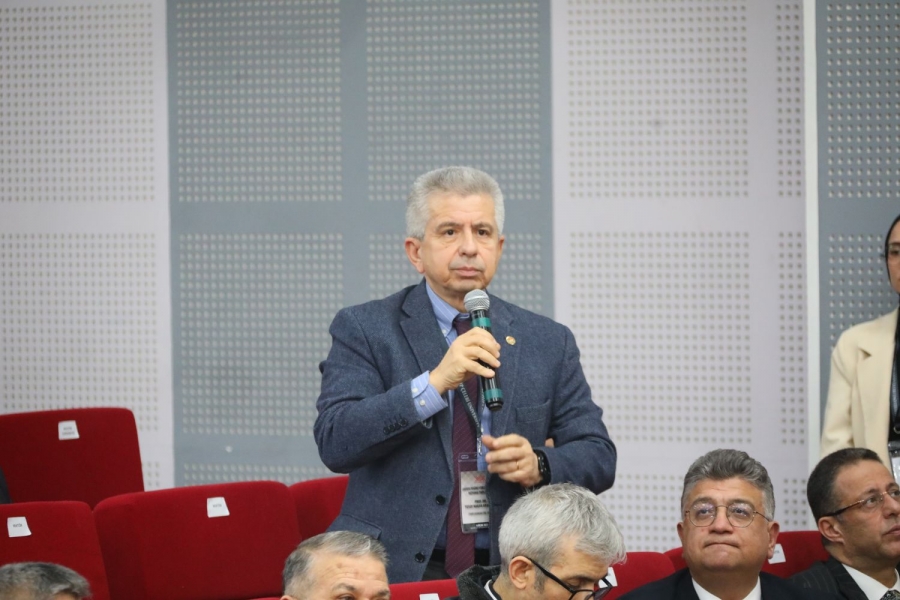
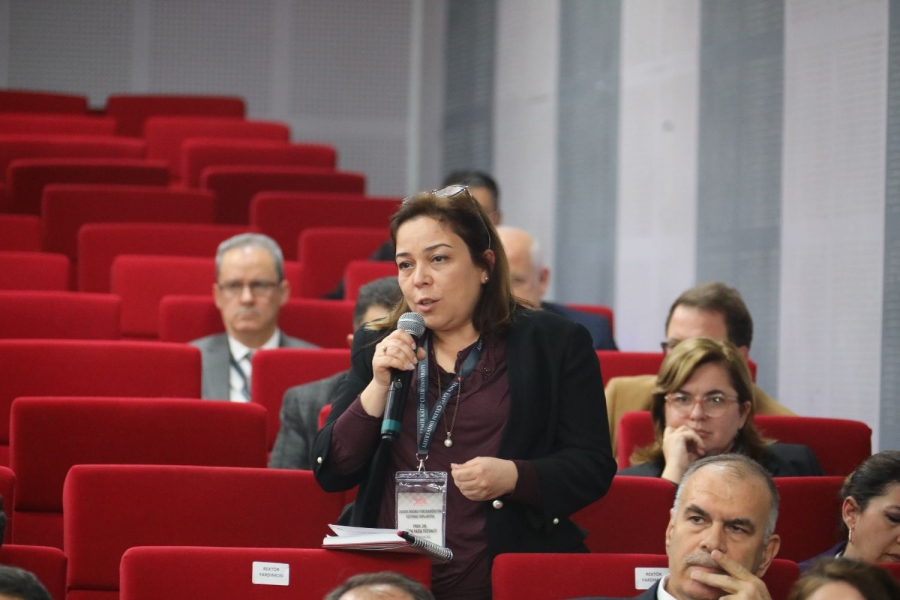
Prof. Dr. Erol Özvar, The President of the Council of Higher Education (CoHE), delivered important messages at the ‘Higher Education Vision Meeting Towards 2030’ hosted by Izmir Katip Çelebi University. was also by Izmir University of Economics (IUE) Rector Prof. Dr. Yusuf Hakan Abacıoğlu, Vice-Rector Prof. Dr. Gözde Yazgı Tütüncü, and Quality Management Systems Manager Ceren Koyuncuoğlu Yılmaz also attended the meeting, where potential changes in university education in the coming years due to the impact of technology and the issues to be focused on were discussed.
Speaking at the event, Prof. Dr. Özvar recalled that they had previously held similar meetings in Ankara, Diyarbakır, and Niğde. Özvar stated that representatives from 13 universities operating in the Turkish Republic of Northern Cyprus (TRNC) also participated in the Izmir program, and said, “We have come together to address the challenges that higher education in Turkey may face in the coming years. We need to take various measures by focusing on issues such as digital competence, big data, international recognition, prestige, entrepreneurship, innovation, performance, and quality assurance to successfully overcome these challenges and strengthen the future of our universities.”
STUDENT NUMBERS WORLDWIDE WILL REACH 600 MILLION
Özvar explained that higher education, which in the second half of the 20th century was an elitist institution catering only to a limited segment of society, has begun to reach much wider segments of the population. Stating that 250 million students worldwide are currently enrolled in higher education, Özvar emphasized that this number is projected to reach 380 million in 2030 and 600 million in 2040.
NEW EDUCATION TECHNOLOGIES
Stating that with the development of education technologies following the Covid-19 pandemic, online education platforms, artificial intelligence-supported personalized learning, and virtual and augmented reality applications have come to the forefront, Özvar emphasized the importance of balancing traditional education with new education technologies. Prof. Dr. Özvar said, “The expansion of teaching capacity and higher education programs has increased access to universities, as reflected in the data; higher education institutions across the country have enabled the young population to meet with science and technology. This expansion of capacity has led to concerns about the quality of education in some segments. We are all closely following and aware of this. Meeting the societal expectation for capacity and quality to increase equally concerns not only CoHE or the Higher Education Quality Council (THEQC) but all university stakeholders.”
CAPACITY MUST BE CROWNED WITH QUALITY
Prof. Dr. Özvar stated that Turkish universities have successfully passed the test in meeting international accreditation standards and in global university rankings. Noting that higher education in Turkey has reached its capacity limit, Özvar said, “Now, this capacity needs to be crowned with quality. The most important agenda item of the Council of Higher Education will be to reach higher quality standards, especially in education and training, as well as in research, development, and academic performance.”
YOUNG POPULATION MAY DECREASE
Emphasizing that being strong in global competition in the fields of science and technology is possible through the scientific productivity of academics, Özvar stated that increasing productivity and raising quality are among their unchanging goals. Stressing that Turkey is rapidly becoming an aging country, Özvar said, “The rapid decline in birth rates in recent years signals a decrease in the young population in the coming years. The decrease in the young population in Turkey may lead to a decrease in the demand for education and enrollment in universities in the future. Regarding the potentially decreasing access demand due to population decline, the question of how to obtain a greater share from international student mobility should be on the agenda of our universities and relevant state units.”